 Chinese
  English
  French
  German
  Italian
  Spanish
  Portuguese
  Japanese
  Korean
  Arabic
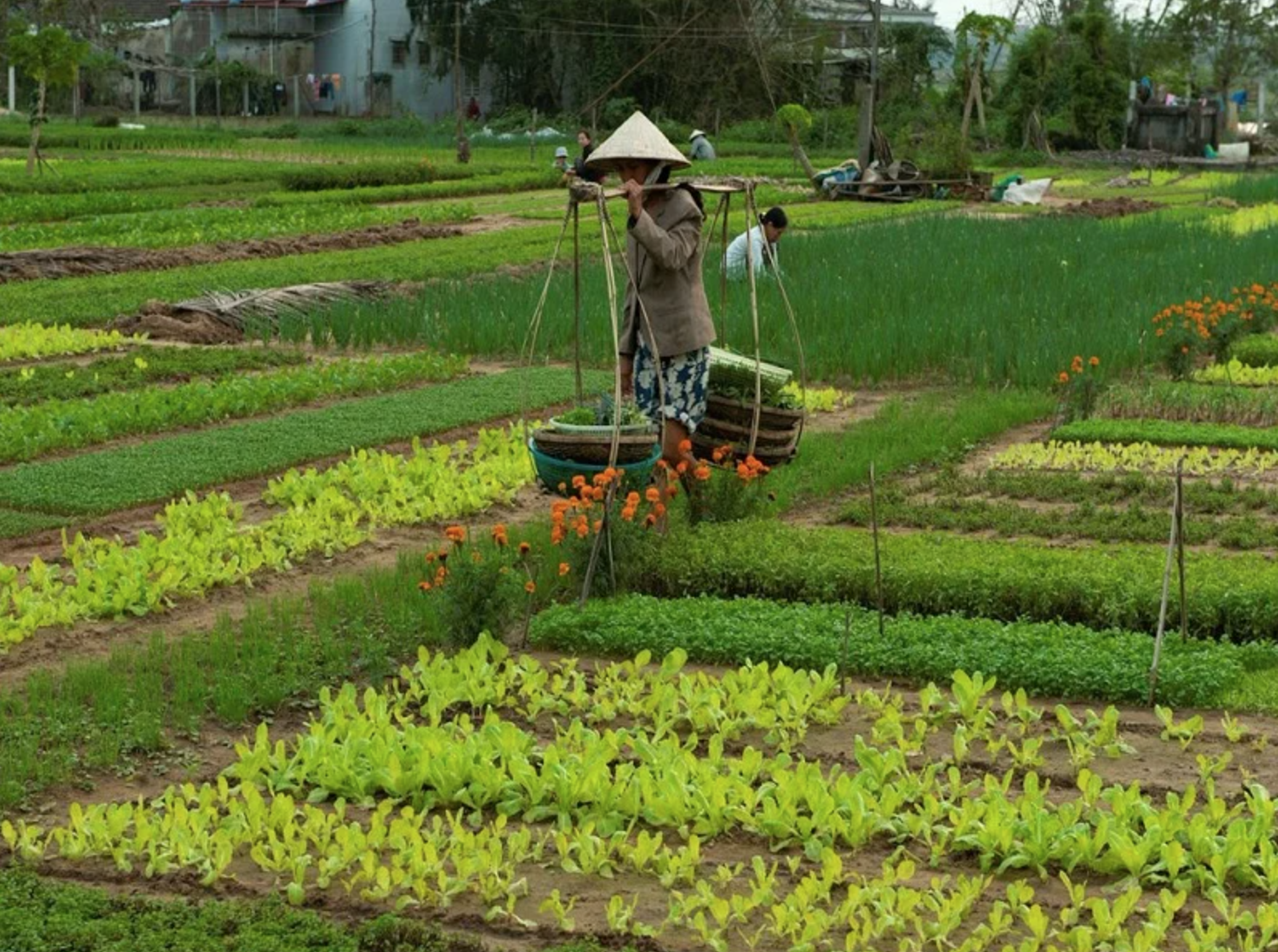
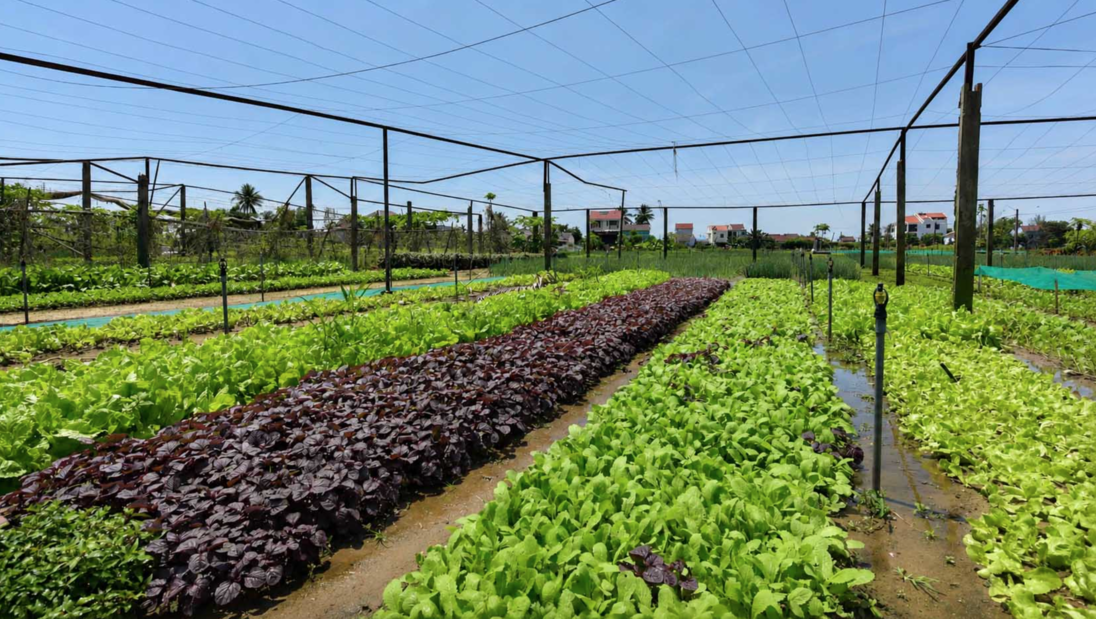
Three kilometers outside the lantern lit chaos of Hoi An Ancient Town, rows of basil, perilla, and Vietnamese coriander stretch toward the Co Co River. There are no tour buses idling here, no souvenir stalls, just farmers in conical hats, watering cans on bamboo yokes, and a 400 year old rhythm of life that hasn’t changed much since the 17th century, when the first families settled this fertile strip of alluvial soil between the river and Tra Que Lagoon.
For agents building Hoi An itineraries, Tra Que Vegetable Village isn’t just a pretty half day filler. It’s one of the easiest, most satisfying add ons in Central Vietnam, and it converts.
Why Demand for Tra Que Is Widening
Client behavior has shifted. Travelers aren’t collecting landmarks anymore, they’re collecting experiences that feel earned. Two demand signals are converging on Tra Que at exactly the right moment for agents to act on them.
Slow, hands on travel is outselling checklist sightseeing. Guests increasingly ask for something they can do, not just see: digging soil, watering crops with a shoulder yoke, sitting down to a meal they helped harvest. Tra Que’s official “Day as a Farmer” program was built for exactly this request.
Food forward travelers want provenance. Cao lau, mi quang, banh xeo, tam huu: the dishes guests already love in Hoi An restaurants trace directly back to these fields. Being able to say the herbs on tonight’s plate were picked this morning in the village guests are about to visit is a story that sells itself.
And this is where Tra Que pulls ahead of every other “village experience” on the market. In 2022, its traditional farming knowledge was officially recognized as Vietnam’s National Intangible Cultural Heritage. In 2024, it earned a place on UN Tourism’s list of Best Tourism Villages, one of only a handful of destinations in the country to carry that distinction. For agents, that’s not a nice detail to mention in passing, it’s the proof point that turns a pitch into a booking: you’re not asking clients to gamble on an unknown village, you’re offering them a destination with international recognition behind it. That’s the kind of credibility that closes sales and builds the trust that brings clients back for their next trip.
 Sources:
https://vietnam.travel/things-to-do/tra-que-vegetable-village-hoi-an-ultimate-%E2%80%9Cgreen%E2%80%9D-trip
https://nestahotel.com.vn/en/blog/hoi-an-traditional-craft-villages/#thanh-ha-pottery-village-experiencing-%22blooming-clay%22-by-the-thu-bon-river
The Living History of Tra Que Vegetable Village
The village traces back to the 17th century, when the Pham, Mai, Nguyen, and Le families migrated south from northern Vietnam and settled on this island-like strip of land, ringed by rivers and rich in silt. The Tran and Ho families joined them later. Remnants of old wells and shrines suggest Cham communities lived in the area even earlier.
Its name carries its own legend. In the early 18th century, Emperor Minh Mang stopped here while sailing along the Co Co River and was struck by the fragrance drifting from the herb gardens, so good it reminded him of tea and cinnamon. He named the village accordingly: Tra Que.
Every year, on the seventh day of the first lunar month, farming families gather for the Cau Bong Festival to honor their ancestors and pray for a good harvest, a good season, and freedom from disease. It also marks the first planting of the year and includes a friendly competition to make the best tam huu.
Sources:
https://hoiandaytrip.com/tra-que-vegetable-village-hoi-an/
https://danangfantasticity.com/en/tra-que-vegetable-village
Things to See & Do in Tra Que Vegetable Village
There’s enough here to fill anywhere from ninety minutes to a full morning, which makes it flexible for agents building both quick countryside add ons and full day cultural programs.
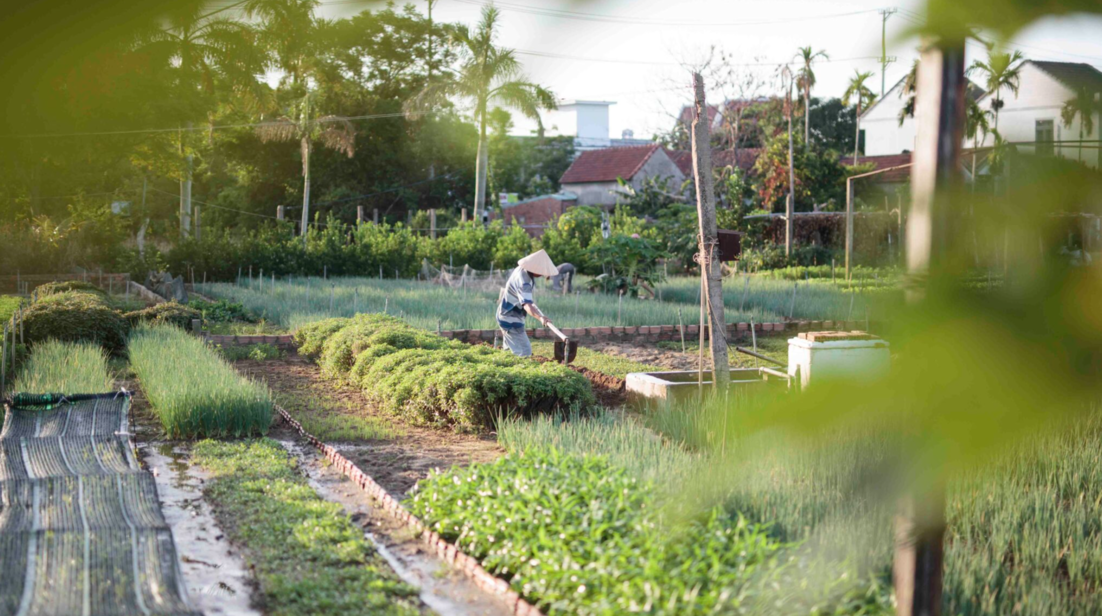
- Wander the vegetable, herb, and flower gardens. Over 50 varieties grow here, including lemongrass, sweet basil, lemon basil, mint, rice paddy herb, cilantro, lettuce, and daisies, all tended by hand without chemicals or preservatives. Early morning and late afternoon bring farmers out into the fields, ideal for photography and casual interaction.
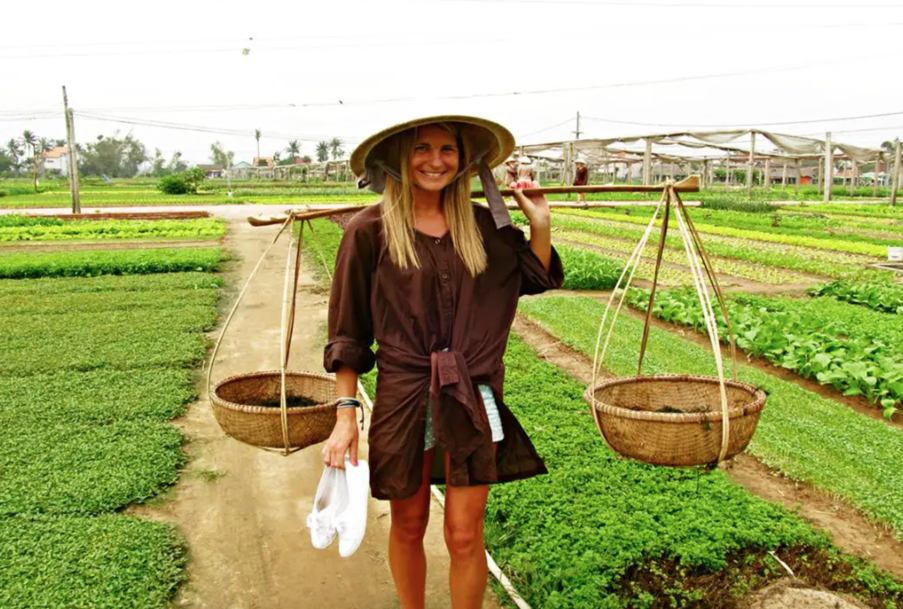
- Join a farming experience with a local family. Guests dress in traditional farmer’s shirts and try the full manual process: turning soil with a hoe, letting it sun dry, planting seedlings by hand, and watering with the classic bamboo shoulder yoke and buckets, the same organic method that earned Tra Que its heritage status. It’s consistently one of the most requested experiences for families traveling with children.
- Take a cooking class. A local host walks guests through the herb garden, explains how each ingredient is used in Hoi An cuisine, then leads a hands on class making dishes like fresh spring rolls and rice pancakes, using ingredients picked that same morning.
- Visit the Tomb of Nguyen Dien, a 19th century military mandarin from one of the village’s founding families, recognized as a provincial historical site.
- See the ancient Tra Que Stone Well, believed to have been built by Cham residents before the 14th century and still used by farmers today to water their crops.
- Explore the surrounding rice fields and rivers, home to duck farms, lotus swamps, water buffalo, and traditional bamboo fish traps, best appreciated on foot or by bicycle, especially at sunset.
- Try the local herbal drink, a refreshing blend of tea, lime, sweet basil seeds, ginger, and pandanus leaf, often included with the entry ticket.
- Taste tam huu, the village’s namesake roll of boiled pork belly, shrimp, and fresh herbs, served at nearly every restaurant in the village.
Sources:
https://hoiandaytrip.com/tra-que-vegetable-village-hoi-an/
Best Time to Visit Tra Que Vegetable Village
The best months to plan a Tra Que visit line up with the best months to visit Hoi An overall: February through September, when the weather is sunny and dry.
The high season for international arrivals, roughly October through January, brings busier mornings when group tours arrive, so afternoons are a smarter recommendation for agents wanting to avoid crowds for their clients. This same window also carries a higher chance of rain and, later in the season, typhoons strong enough to temporarily suspend farming and cooking activities altogether. Building in a flexible day, or scheduling Tra Que earlier in a Central Vietnam itinerary, helps protect the experience from weather related cancellations.
Tips to Visit Tra Que Vegetable Village
Practical guidance worth passing on to your travelers or building directly into your itinerary notes:
- In the dry season (February to August), pack sun cream, sunglasses, a hat, and plenty of water.
- In the rainy season (September to January), a rain poncho and waterproof footwear go a long way.
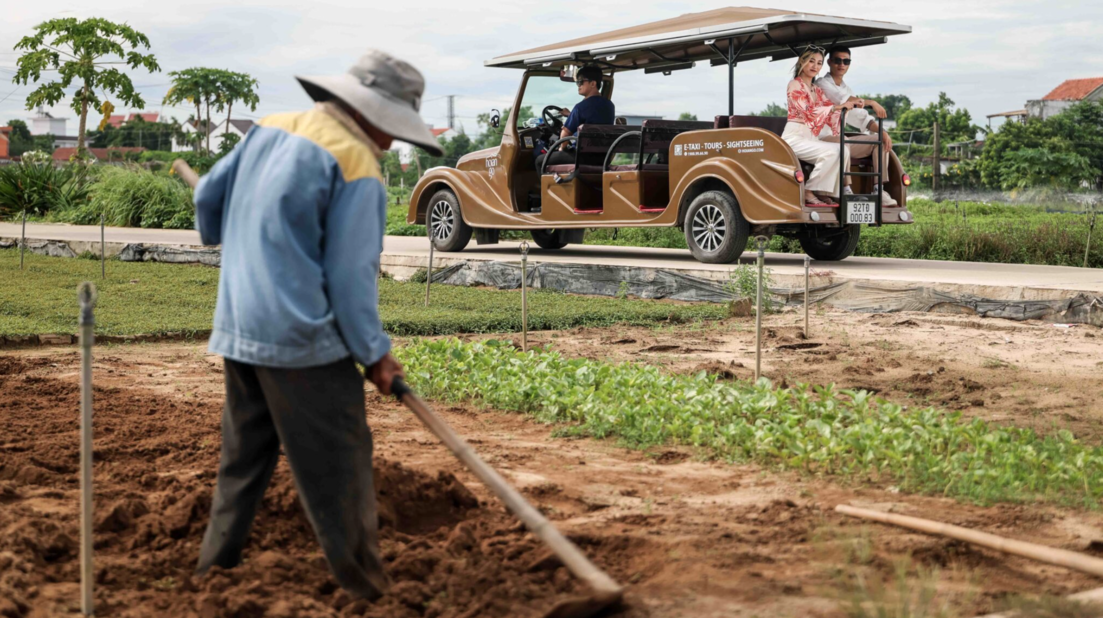
- Cycling is one of the best ways to reach and explore the village, and bikes are often free through hotels or available cheaply for rent.
- A local guide makes a real difference here. Without one, it’s easy to miss the farmers, the history, and the language needed to join in properly.
- Evenings are quiet and largely free of tour groups, though a handful of restaurants stay open.
- No ticket is required simply to walk through the village, and because no chemicals are used, herbs are safe to try straight from the garden, though it’s courteous to check with the farmers first.
- There’s no dress code, but modest, comfortable clothing suits the farming activities best.
Sources:
https://hoiandaytrip.com/tra-que-vegetable-village-hoi-an/
What strengths does Anvui bring to this product?
With strong local partnerships and hands-on operational experience in Tra Que Vegetable Village, Anvui is well-positioned to deliver high-quality winter travel experiences. The company has deep expertise in seasonal tourism trends and customer behavior, enabling it to design products that closely align with market demand. With flexible itinerary development for FIT, GIT, and inbound markets, along with competitive pricing and consistent service quality, Anvui ensures reliable and efficient service delivery.
Furthermore, the company provides 24/7 operational support, helping partners manage bookings smoothly while enhancing overall customer satisfaction and service consistency.
🔗 Let’s connect and grow together!
总部 / 销售中心: 5th Floor, H&N Building, 329-331 Hoang Quoc Viet Street, Cau Giay District, Hanoi, Vietnam.
Operation Offices: Vietnam (Hanoi, Danang, Ho Chi Minh), Laos (Vientiane), Cambodia (Siem Reap), Myanmar (Yangon), Thailand (Bangkok)
Email: info@anvuitravel.com
Cellphone No. (Hotline): +84 912 683 908 (Whatsapp, Telegram, Viber)
Fanpage: https://www.facebook.com/anvuitravel84/
Tiktok: https://www.tiktok.com/@anvuitravel
Instagram: https://www.instagram.com/anvuitravel/
LinkedIn: https://www.linkedin.com/company/anvui-travel/about/?viewAsMember=true
#TraQueVegetableVillage #HoiAn #VietnamFarmVillage #OrganicFarming #SlowTravel