 Italian
  English
  French
  German
  Spanish
  Portuguese
  Japanese
  Korean
  Chinese
  Arabic
Vietnam’s European source markets are becoming increasingly important for travel product development. In the first eight months of 2026, Vietnam welcomed 15.9 million international visitors, up 14.4% year on year, according to Vietnam’s National Statistics Office. European markets contributed 2.7 million arrivals, representing 16.8% of total international visitors.
For travel partners, the question is therefore not simply where to send these travellers, but what experiences can add depth to a long-haul Vietnam itinerary. Sapa trekking provides one answer: an experience that combines physical activity, landscape and contact with local highland life within the same product.
Why Sapa Trekking Fits the European Market
The growth of European travel to Vietnam is particularly notable. Arrivals from Europe increased 53.4% year on year during the first eight months of 2026, although this headline increase was partly driven by particularly strong growth from Russia. Germany grew 15.1%, France 13.4% and the UK 9.8% over the same period.
At the same time, European travel behaviour provides useful context for product design. The European Travel Commission reported that in 2025 European travellers were taking slightly fewer holidays but favouring longer trips of around 7–12 nights, with greater emphasis on immersive and meaningful travel experiences.
For long-haul Vietnam programmes, this creates space for experiences that go beyond conventional sightseeing.
Sapa works particularly well because trekking is not separated from the destination experience. Trails pass through rice terraces, mountain landscapes and villages, allowing walking to become a way of discovering the region rather than simply an outdoor activity.
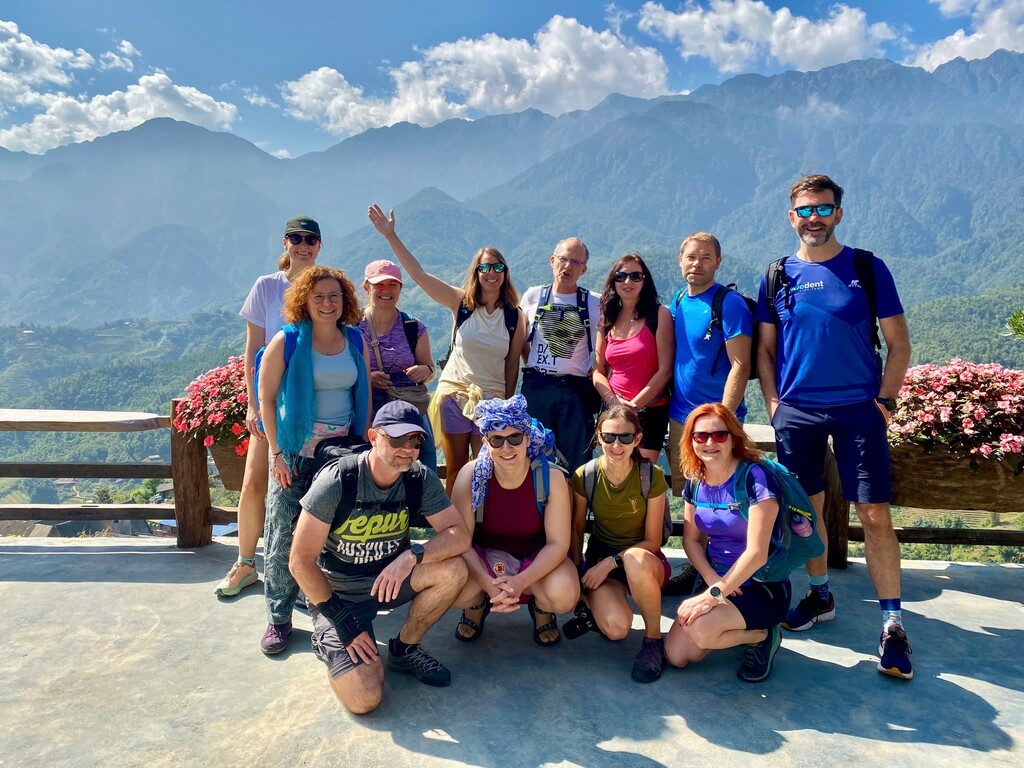
Sapa Trekking Experience
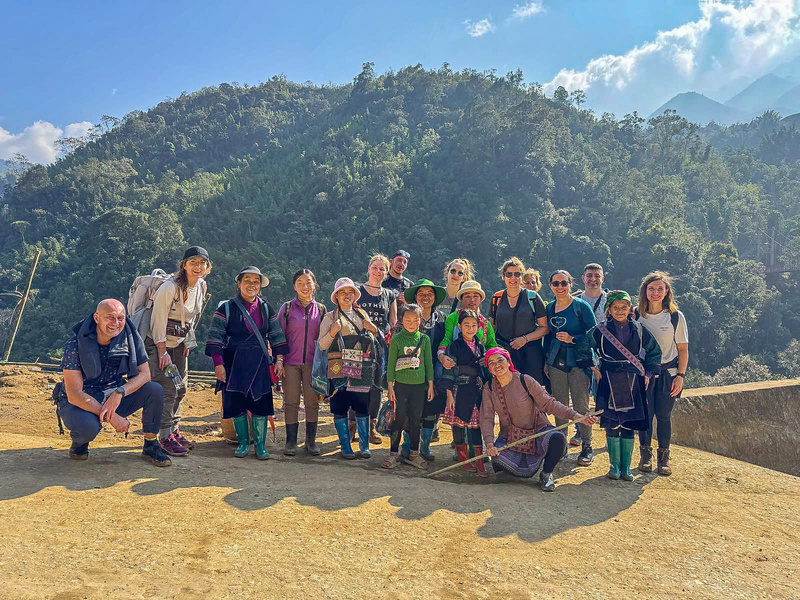
A recent European group experienced Sapa beyond conventional sightseeing, trekking through rice terraces, mountain paths and local communities. Their journey shows how active discovery, cultural connection and slower travel can turn Sapa into a more personal Vietnam experience. For many travellers, Sapa first appears as a landscape: mountains, rice terraces and mist-covered valleys. But for our recent European group, the experience became much more personal once they started discovering the region on foot.
Rather than moving quickly between viewpoints, the guests followed mountain trails, walked alongside terraced fields and experienced parts of everyday life in local ethnic communities. What stayed with them was not simply what they saw, but how the journey made them feel. “We had seen many photos of Sapa before coming to Vietnam, but walking through the terraces felt completely different. You suddenly understand how large and peaceful the landscape really is.”
That sense of discovery shaped the entire trekking experience.
 Seeing Sapa From Inside the Landscape
 Seeing Sapa From Inside the Landscape
One of the most memorable parts of the trek was simply being surrounded by the scenery.
From a viewpoint, Sapa’s rice terraces can be admired from a distance. On foot, travellers experience the landscape differently. They notice the changing terrain, the quiet of the valleys, the rhythm of village life and small details that would easily disappear during a vehicle-based tour. Our guests had time to stop, take photographs and enjoy the surroundings without feeling that they needed to immediately move on to another attraction. One reflection that captures this feeling was: “The best moments were sometimes the simplest ones. We would stop during the walk, look across the valley and just enjoy being there. There was no need to rush.”
For travellers accustomed to busy multi-destination holidays, this slower rhythm can become part of the appeal.
The Trek Itself Became Part of the Story
The trail was not simply a way to reach another sightseeing point. Walking was part of the experience. There were climbs, uneven paths and moments when the group naturally slowed down. Yet those small physical challenges also made each section of the journey feel more rewarding.
A village in the distance was no longer somewhere reached by coach. The travellers approached it step by step. The rice terraces were no longer simply a photography stop. They walked beside them. The mountains were not just scenery in the background. They shaped the journey. “Some parts of the trek were more challenging than we expected, but that actually made reaching the next viewpoint more satisfying. You feel that you have really experienced the mountains rather than just visited them.”
This balance between accessibility and gentle challenge is one reason trekking can work particularly well for active European travellers.
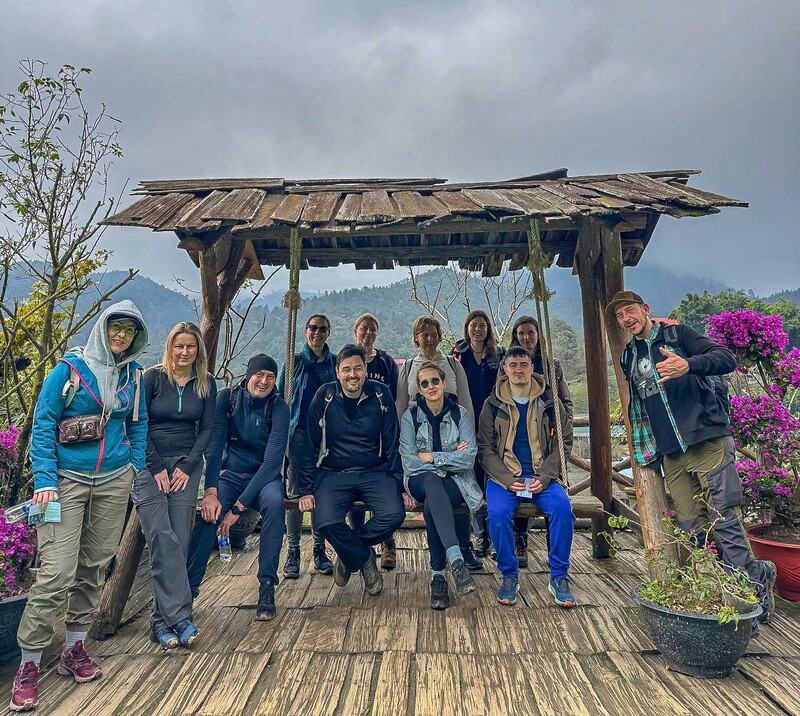
Discovering Local Life Along the Way
Another important part of the journey was experiencing local life outside Sapa town. As the group moved through the countryside, houses, farmland, village paths and everyday activities naturally became part of the experience.
Rather than encountering local culture through a formal sightseeing stop, guests could observe how people live within the landscape they were walking through. For many travellers, these quieter moments often become as memorable as the main attractions. “What we enjoyed most was that the cultural experience did not feel separate from the trek. We were walking through places where people actually live and work, so everything felt much more natural.”
The group could see farmland being used, homes along the trail and communities connected to the mountains around them. Conversations with the guide also helped provide context about local traditions and everyday life. This is where a trekking experience becomes more than an outdoor activity. It becomes a way of understanding the destination.
Slowing Down Changed the Experience
Trekking also changes the rhythm of travel. Travellers cannot move through a mountain trail in the same way they move between city attractions. Walking requires time. There are moments to stop, rest, talk and simply observe what is happening around the group. For our European guests, this slower pace created more opportunities to appreciate the destination.
It also created shared moments within the group: conversations during the walk, encouragement on more difficult sections and the satisfaction of completing the route together. At the end of the experience, the feeling was less about having “completed” another attraction and more about having spent meaningful time in the landscape. “We were tired at the end, but in a good way. It felt like we had spent the day experiencing Sapa rather than just sightseeing in Sapa.” That difference is important.
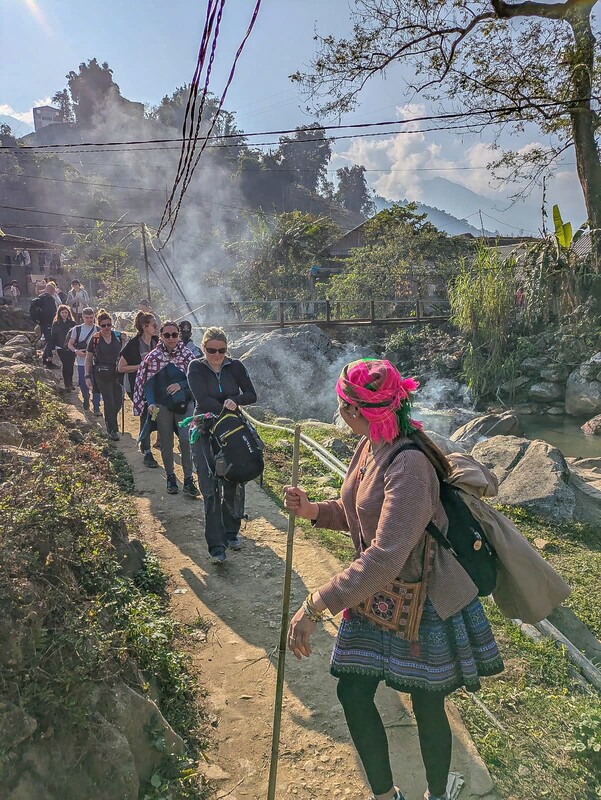
Which Travellers May Enjoy This Experience?
The Sapa trekking experience can be particularly attractive to:
- Active travellers who want walking to be part of their holiday rather than a separate sporting activity.
- Cultural travellers who appreciate discovering communities and everyday life within the wider destination.
- Couples and small groups looking for experiences that encourage a slower pace and more personal interaction.
- Photography-focused travellers interested in rice terraces, mountain landscapes and rural scenes.
- European long-haul travellers looking to combine Vietnam’s major heritage destinations with nature and activity.
- However, trekking should never be treated as a one-size-fits-all product.
Walking distance, trail difficulty, elevation, weather and traveller fitness should all be considered when selecting the route.
Turning the Experience Into the Right Itinerary
For travel partners, the strongest Sapa programme is not necessarily the one with the longest or hardest trek. It is the one that fits the traveller. More active clients may enjoy longer routes through several villages. Photography-oriented travellers may prefer shorter walking distances with more time for scenic stops. Cultural travellers may value more opportunities for conversation and local interaction.
The objective is therefore not to cover as much ground as possible. It is to create enough time for guests to engage with the destination. Our recent European group illustrated this well. Their journey combined landscapes, walking and local culture, but the most memorable moments were often the pauses between activities: looking across a valley, talking during the trail or simply observing daily life along the route.
Planning a Vietnam programme for European or active-travel clients? Share your traveller profile, preferred duration and travel period with An Vui Travel. Our team can help design a Sapa experience balancing trekking, local interaction and realistic routing.
#AnVuiTravel #SapaTrekking #VietnamExperiences #B2BTravel
🔗 Let’s connect and grow together! Visit us at
Headquarter / Sales Hub: 5th Floor, H&N Building, 329-331 Hoang Quoc Viet Street, Cau Giay District, Hanoi, Vietnam.
Uffici operativi: Vietnam (Hanoi, Danang, Ho Chi Minh), Laos (Vientiane), Cambodia (Siem Reap), Myanmar (Yangon), Thailand (Bangkok)
Email: info@anvuitravel.com
Cellphone No. (Hotline): +84 912 683 908 (Whatsapp, Telegram, Viber)
Fanpage: https://www.facebook.com/anvuitravel84/
Tiktok: https://www.tiktok.com/@anvuitravel
Instagram: https://www.instagram.com/anvuitravel/
Linkin: https://www.linkedin.com/company/anvui-travel/about/?viewAsMember=true
Web: https://anvuitravel.com
✨ Together, let’s make travel extraordinary! ✈️