 French
  English
  German
  Italian
  Spanish
  Portuguese
  Japanese
  Korean
  Chinese
  Arabic
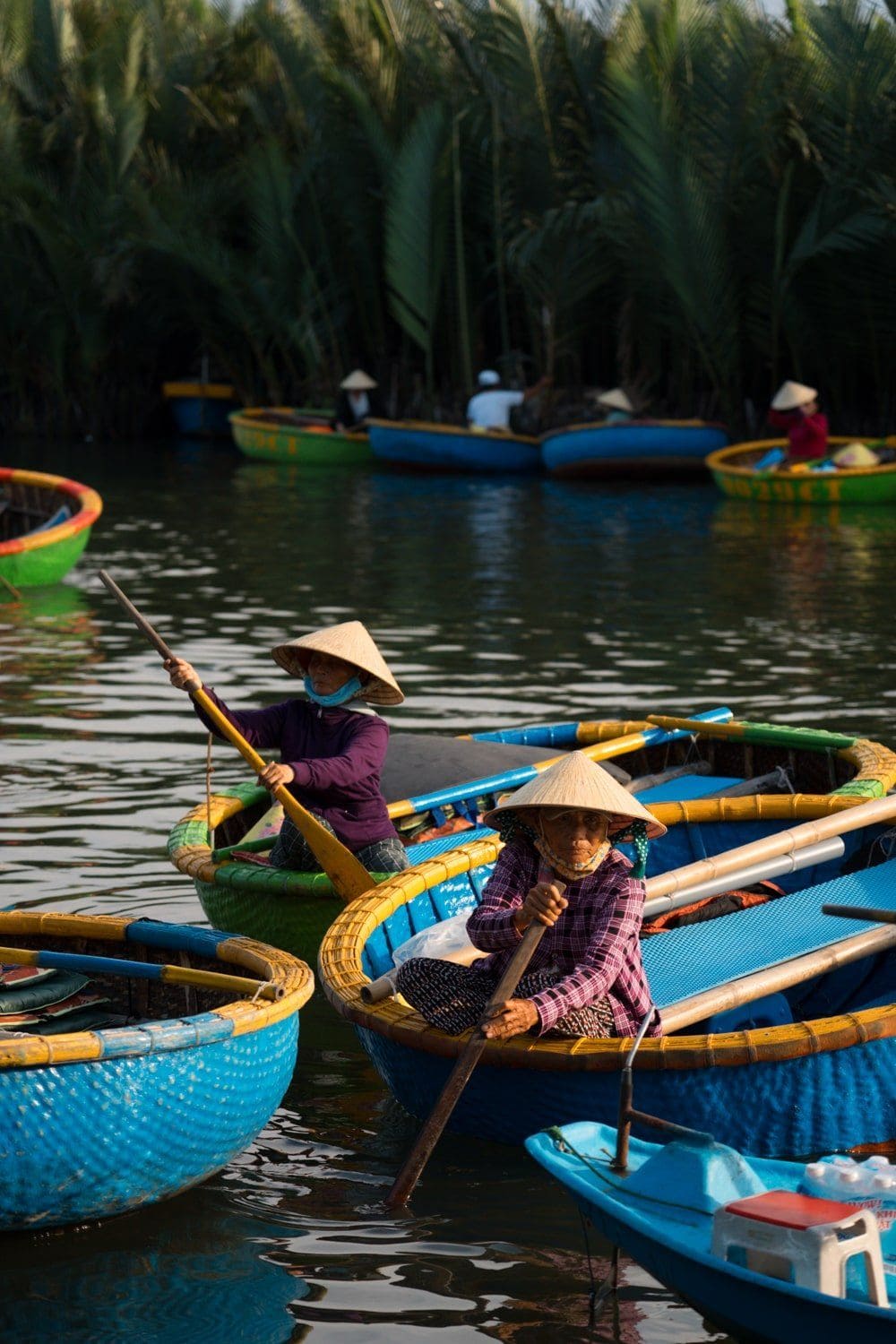
A wooden rowing boat slips beneath a limestone cliff in Ninh Binh. Hundreds of kilometres south, a sampan turns from a broad Mekong river into a narrow canal shaded by tropical palms. Near Hoi An, a circular bamboo basket boat moves between dense stands of nipa coconut, its shape and movement entirely different again.
All three are boat trips. Yet they tell very different stories about Vietnam.
Water in Vietnam is more than scenery. Rivers, wetlands, canals and flooded agricultural landscapes have influenced where communities developed, how crops were cultivated, how goods moved and how people made a living. In destinations such as the Mekong Delta, waterways remain closely connected with commerce and everyday activity; in Ninh Binh, water leads travellers directly into a karst landscape of valleys, caves and cultural sites.
For travel agents, this is what makes a Vietnam boat trip especially valuable. Travelling by water changes both the viewpoint and the pace. Instead of moving quickly from one attraction to another, clients sit closer to the landscape, hear the rhythm of paddles on the water and notice details that are easily missed from a road.
Sometimes transportation itself becomes the experience.
Trang An: Moving Through Landscape and Heritage
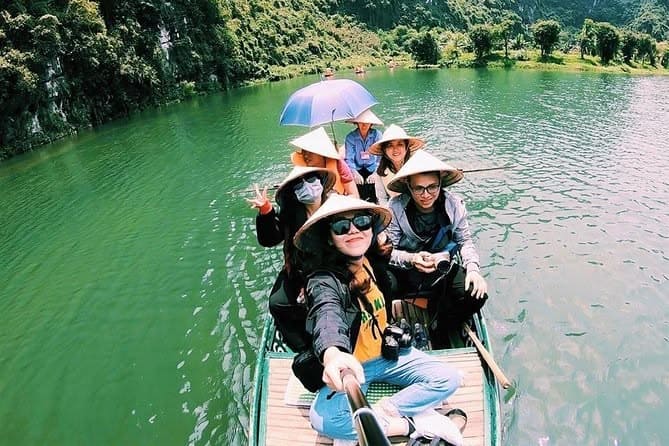
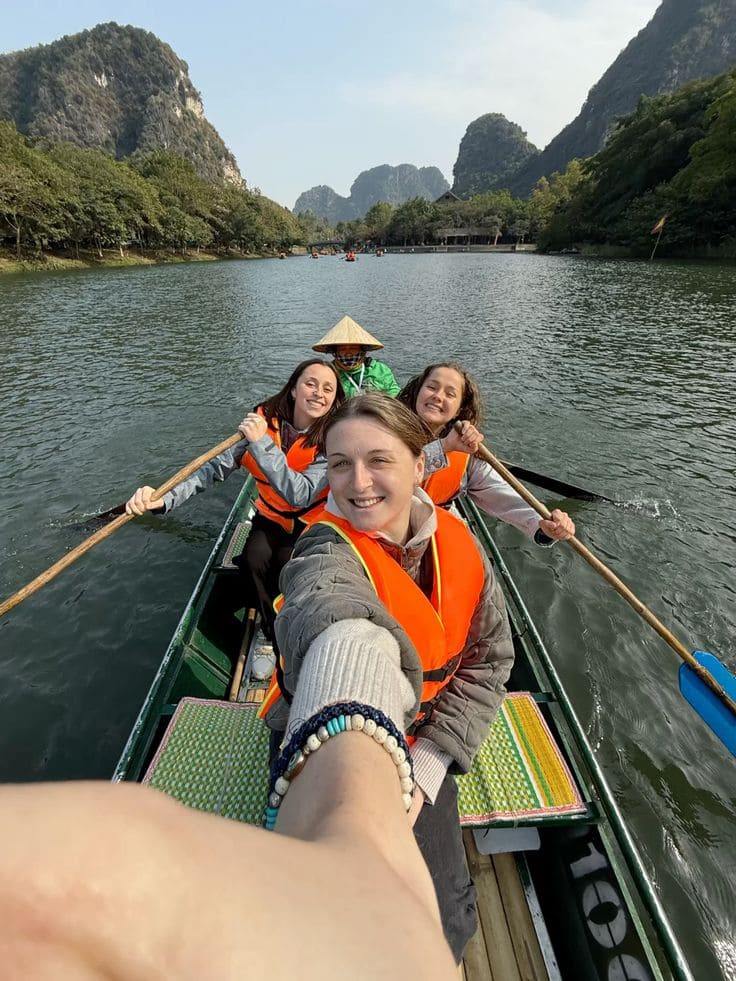
At Trang An in Ninh Binh, the journey unfolds as a sequence rather than a single view. A small boat crosses calm water before approaching steep limestone walls. An open valley narrows. The boat enters a cave, where daylight disappears and the sound of the oars changes. Minutes later, another opening reveals water, vegetation and cliffs again. Cultural and spiritual sites appear between sections of the natural landscape.
This relationship between geology, water and human history is central to Trang An. UNESCO inscribed the Trang An Landscape Complex on the World Heritage List in 2014 as Vietnam’s mixed cultural and natural World Heritage property. Its landscape includes forest-covered limestone towers, enclosed valleys and an interconnected system of subterranean waterways, alongside archaeological evidence and cultural sites.
The significance for an itinerary, however, is not simply the UNESCO designation. The value of a Trang An boat trip comes from movement through the landscape. Travellers do not stand outside the scenery looking in. They pass between cliffs, cross water-filled basins and move through cave passages by boat. UNESCO itself describes traditional sampans rowed by local guides as a way visitors experience an intimate relationship with this environment.
Vietnam Tourism also notes that Trang An routes combine grottoes with temples and other sacred sites. This gives the experience a layered character: nature, heritage and slow exploration rather than scenery alone.
For travel agents, Trang An therefore works particularly well when the objective is to create a contemplative section within a Northern Vietnam program. It can change the rhythm after Hanoi’s streets, museum visits or road transfers without requiring clients to stop exploring.
Sources:
https://culturephamtravel.com/ninh-binh-boat-tour/
https://vietnam.travel/things-to-do/guide-boat-tours-ninh-binh
Tam Coc: At Water Level Between Rice Fields and Karst Mountains
Tam Coc shares Ninh Binh’s limestone geography but creates a different visual relationship with it.
The boat follows the Ngo Dong River through an agricultural landscape where rice fields can extend close to water level. Limestone formations rise from the surrounding countryside, while the river passes through the three caves that give Tam Coc its name — Hang Ca, Hang Hai and Hang Ba.
Because agricultural land forms such a visible part of the journey, the Tam Coc boat trip tends to feel more open and rural. Seasonal changes can also alter the character of the scene, particularly when the rice moves from green to mature golden tones. Vietnam Tourism specifically highlights the rice-harvest period as one of the visually distinctive times on the route.
Another detail frequently noticed by international visitors is the local practice of rowing with the feet. Vietnam Tourism notes that the technique can be seen on Ninh Binh’s principal boat routes and developed as a way of reducing strain on the hands, arms and back.
It is an interesting cultural observation, but it does not need to become a tourism gimmick. The stronger story is how a practical rowing method has become part of the visual identity of travelling through this river landscape.
The Mekong Delta: Where the Boat Enters Daily Life
In Ninh Binh, water opens a path through the landscape. In the Mekong Delta, water is part of the landscape’s everyday organisation.
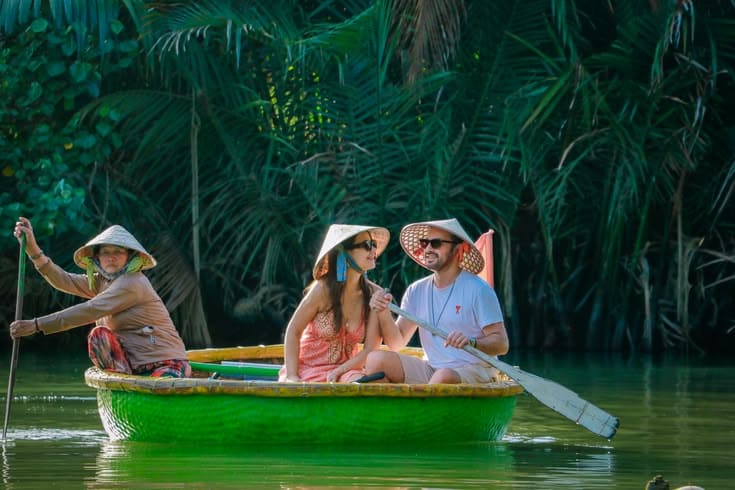
A Mekong Delta boat trip may begin on a relatively broad river, where cargo vessels, passenger boats and local traffic share the water. Later, travellers transfer to a smaller wooden sampan and enter narrower waterways beneath palms and tropical vegetation.
That transition matters.
The large river gives a sense of scale and movement. The smaller canal brings the traveller much closer to houses, gardens, orchards and community life. What begins as transportation gradually becomes observation.
Vietnam Tourism describes Can Tho from the water as a landscape of stilt houses, barges, palms and boats heading to market carrying fruit. Around its river islands, sampan journeys can be combined with family visits, orchards and traditional food or craft activities.
Ben Tre creates another version of the experience. Here, official Vietnam Tourism guidance highlights nipa-palm-fringed canals, coconut production, local workshops, countryside cycling and small sampan rides.
This is why the Mekong Delta sampan should not be treated as an isolated sightseeing inclusion.
Used well, it can connect multiple elements of a program: river landscapes, agriculture, food production, community interaction and slower forms of mobility. Travellers might arrive by motorboat, continue by rowing sampan, walk through a village, visit a small workshop and then cycle along rural lanes. The different modes help reveal different layers of this region.
Source:
https://impresstravel.com/discover-water-coconut-forest-on-the-mekong-delta-tour/
https://vietnam.travel/things-to-do/day-tripping-mekong-delta
Cam Thanh and Bay Mau Coconut Forest: The Basket Boat Story
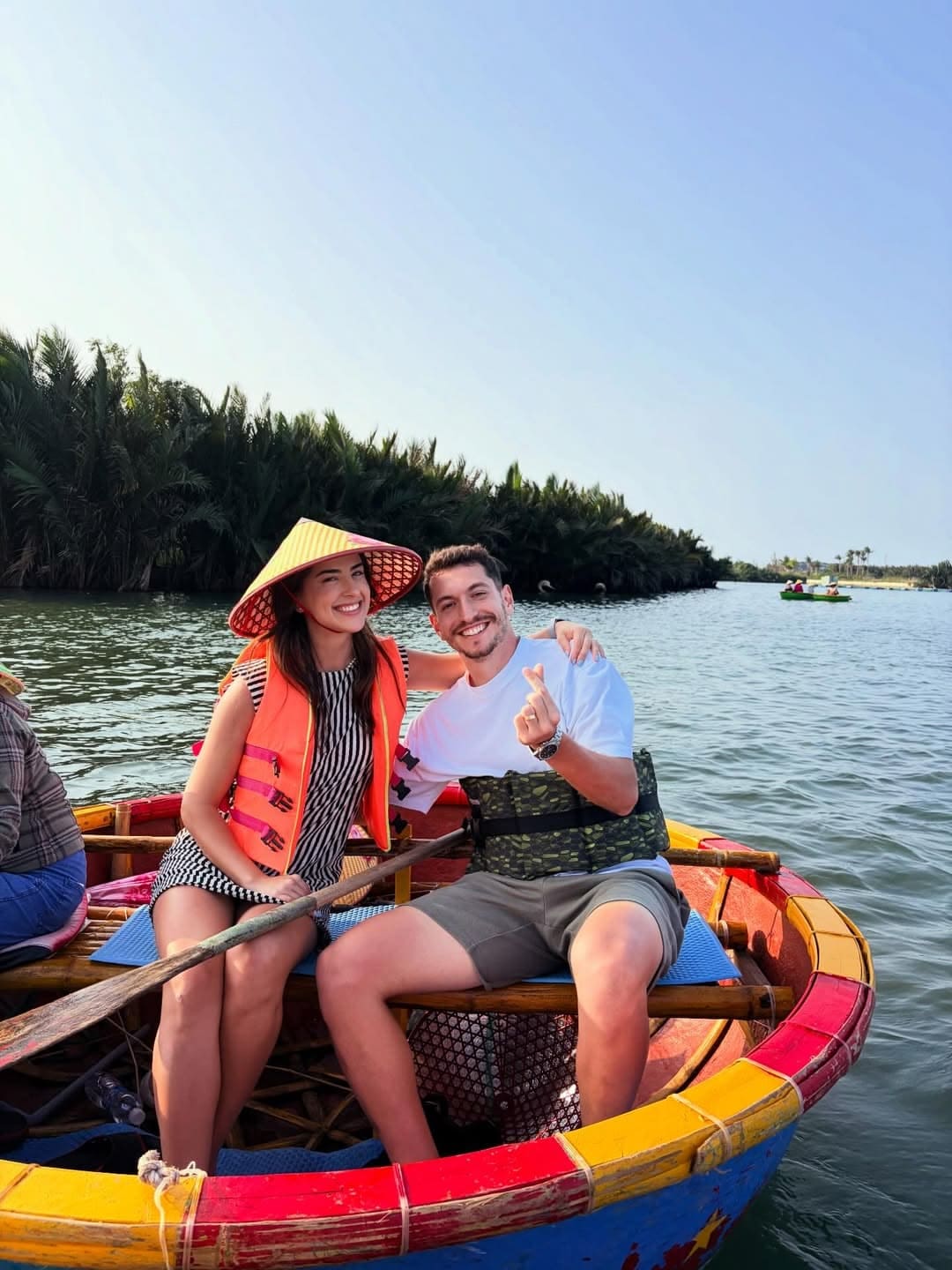
Near Hoi An, waterways thread through stands of nipa palm around Cam Thanh. Here the vessel itself becomes one of the strongest parts of the experience.
Instead of the long wooden sampans associated with parts of the Mekong, visitors travel in a circular woven basket boat, commonly described in English as a basket boat or coracle and known locally as a thuyền thúng.
Today, some tourism programs feature spinning performances, boat races or demonstrations. These can be lively additions, and Hoi An tourism sources acknowledge that spinning has become one of the area’s recognised visitor activities.
For a culturally focused itinerary, however, there is a stronger story available: the relationship between the distinctive circular boat, local fishing practices, the estuary environment, nipa palms and communities that have adapted traditional skills into contemporary tourism.
Traditional net-casting demonstrations, explanations of fishing methods or conversations with local boat operators can give the experience more depth when they are genuinely part of the program. This allows the Coconut Forest visit to remain enjoyable without reducing it to entertainment.
Why Boat Experiences Work So Well in Vietnam Itineraries
For travel agents and tour operators, the most important question is not simply whether a destination offers a boat ride. It is what the boat experience contributes to the overall journey.
A carefully positioned water experience can slow the pace after city sightseeing or long road sectors. It can provide a strong visual transition between urban and rural Vietnam. It can also connect naturally with cycling, village walks, food experiences, orchards, farming activities or traditional crafts.
That makes boat travel particularly relevant to Vietnam slow travel and experience-led itinerary design.
An itinerary containing Hanoi, temples, historic monuments and museums can be culturally rich but physically repetitive if every experience involves walking, driving and stopping. Adding a quiet rowing section in Ninh Binh changes the physical rhythm.
Likewise, a Mekong program is more meaningful when travellers experience the difference between the main river, a small canal, a village road and a family orchard rather than viewing the Delta almost entirely through a coach window.
At An Vui Travel, boat experiences can be used not as isolated sightseeing stops, but as part of the narrative of a journey — connecting travellers with local landscapes, everyday life and a side of Vietnam that is often best understood from the water.
#VietnamBoatTrip #VietnamSlowTravel #NinhBinh #MekongDelta #HoiAn #CulturalTravel #VietnamExperiences #B2BTravel
🔗 Let’s connect and grow together!
Headquarters / Sales Hub: 5th Floor, H&N Building, 329, 331 Hoang Quoc Viet Street, Cau Giay District, Hanoi, Vietnam.
Operation Offices: Vietnam (Hanoi, Danang, Ho Chi Minh), Laos (Vientiane), Cambodia (Siem Reap), Myanmar (Yangon), Thailand (Bangkok).