 English
  French
  German
  Italian
  Spanish
  Portuguese
  Japanese
  Korean
  Chinese
  Arabic
Travelling through Vietnam does not always need to be about getting from one destination to another as quickly as possible. For international tour operators designing Vietnam programmes, the time between destinations can itself become part of the product.
That is where the overnight train Vietnam experience becomes particularly interesting.
Many conventional itineraries connect Hanoi, Central Vietnam and Ho Chi Minh City through domestic flights and road transfers. This works operationally, especially when time is limited. But for travellers increasingly interested in experience-led journeys, there is another possibility: using selected rail sectors to slow down the rhythm of a trip and allow guests to experience the transition between regions rather than simply arriving in them.
This approach is visible in An Vui Travel’s 10-day rail itinerary, which connects Hanoi and Halong Bay with an overnight train to Hue, continues by Heritage Train through the Hai Van Pass towards Da Nang and Hoi An, and later uses another long-distance train journey towards Ho Chi Minh City before concluding with the Mekong Delta.
For travel agents, the opportunity is therefore not simply to replace flights with trains. It is to rethink what travelling through Vietnam can feel like.
Why overnight trains fit the slow travel trend
Slow travel Vietnam should not simply mean spending more days on holiday or moving more slowly.
At product level, it is about giving travellers greater awareness of where they are, how landscapes change and how one destination connects naturally with another. Instead of organising a journey as a sequence of attractions separated by invisible transfers, slow travel gives value to the spaces in between. Rail works particularly well with this philosophy.
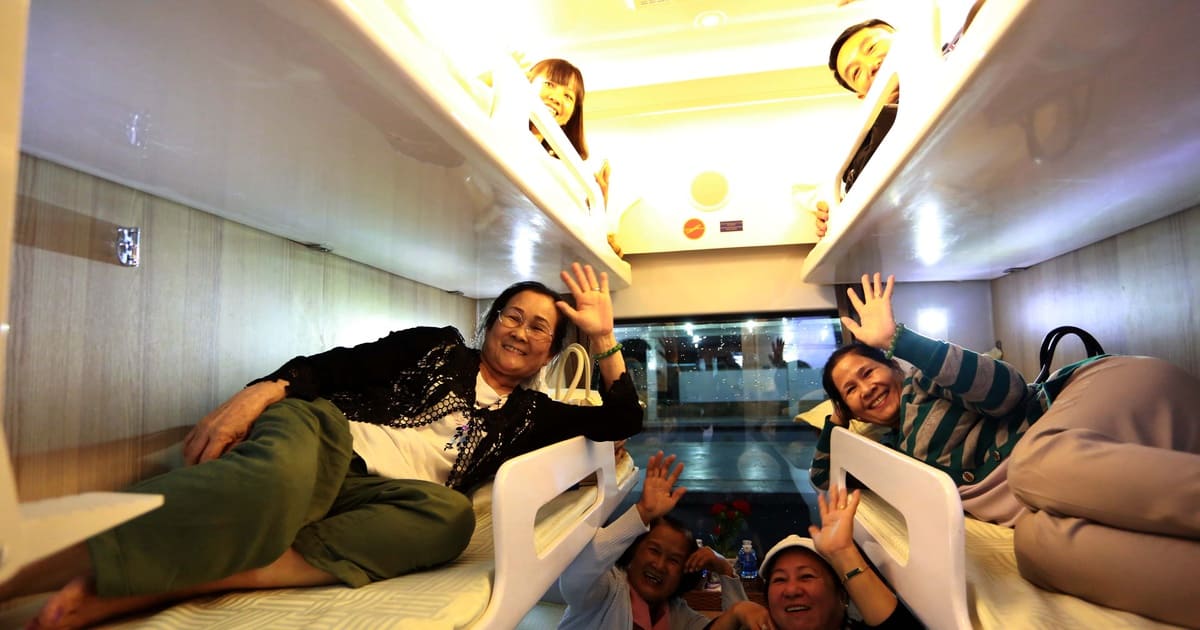
A traveller leaving Hanoi in the evening does not simply disappear from one airport and reappear in another. They board the train, settle into their berth and gradually leave the capital behind. Outside the window, the urban landscape gives way to smaller towns and countryside. The following morning, they wake in another part of Vietnam.
That transition creates a very different emotional experience from a short flight.
It also reflects a wider shift in traveller priorities. Booking.com’s 2026 Travel and Sustainability research, based on 32,500 travellers across 35 markets, found that 85% said more sustainable travel was important or very important to them. The same research found that 43% planned to avoid crowds and 42% intended to travel outside peak periods. These figures do not mean every traveller will automatically choose a train, but they indicate growing interest in travel choices that consider destination impact, seasonality and the way a journey is experienced.
For travel agents, this creates room to design products where rail as part of the experience.
Source:
https://news.booking.com/bookingcoms-latest-travel-and-sustainability-research-reveals-unexpected-generational-paradox/
When the journey becomes part of the destination
Vietnam is particularly suited to this style of travel because its geography creates strong regional transitions. A Vietnam rail journey can reveal countryside, agricultural landscapes, towns, local stations, mountains and stretches of coastline that travellers would never see from the air.
There is also something important about scale. Travelling overland gives visitors a clearer sense of Vietnam’s length and regional diversity. Hanoi, Hue, Hoi An and Ho Chi Minh City no longer feel like isolated points on an itinerary map. The traveller experiences the distance between them.
The Hue–Da Nang sector is an especially clear example.
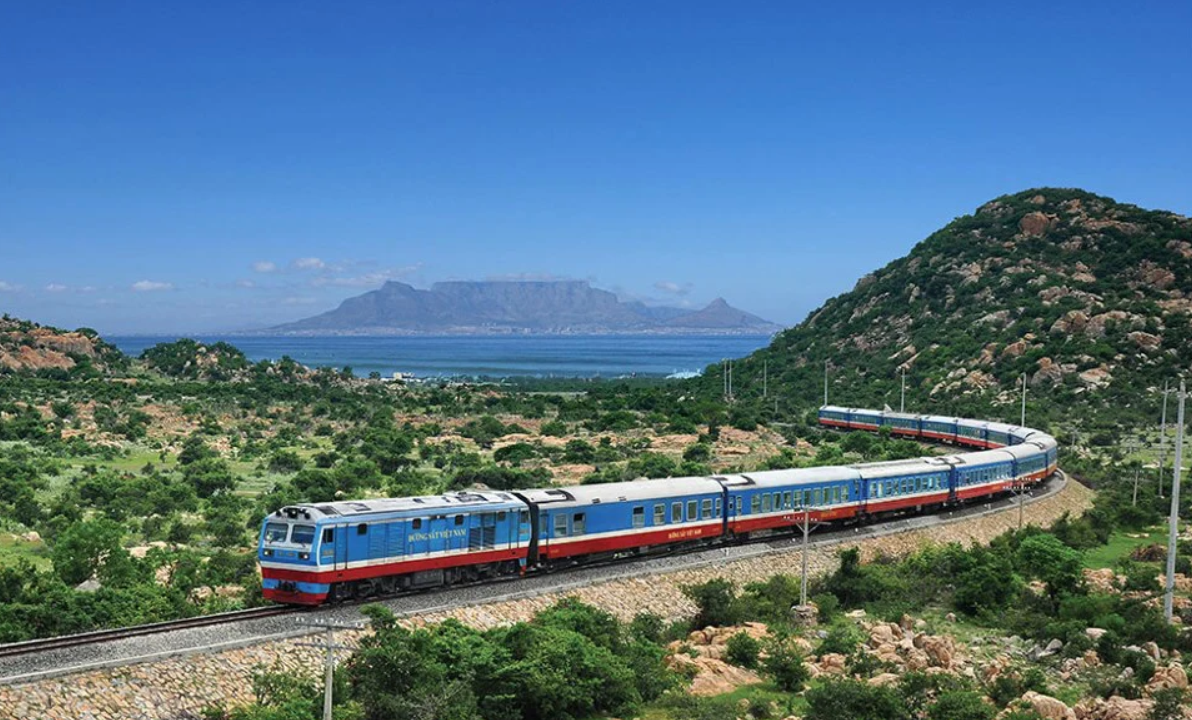
An Vui Travel’s itinerary uses the Heritage Train for the roughly three-hour journey from Hue towards Da Nang. The route passes through the Hai Van Pass, with views towards the Truong Son mountain range on one side and the sea on the other. In a conventional itinerary, Hue–Da Nang might simply be described as a transfer. With a Vietnam Heritage Train experience, the transfer becomes sightseeing. Instead of Hue – Da Nang transportation, the product story becomes “A scenic rail journey across the Hai Van Pass between mountains and sea.”
That difference matters when travel agents are trying to create programmes that feel less interchangeable with standard touring itineraries.
Overnight trains can make itineraries more efficient
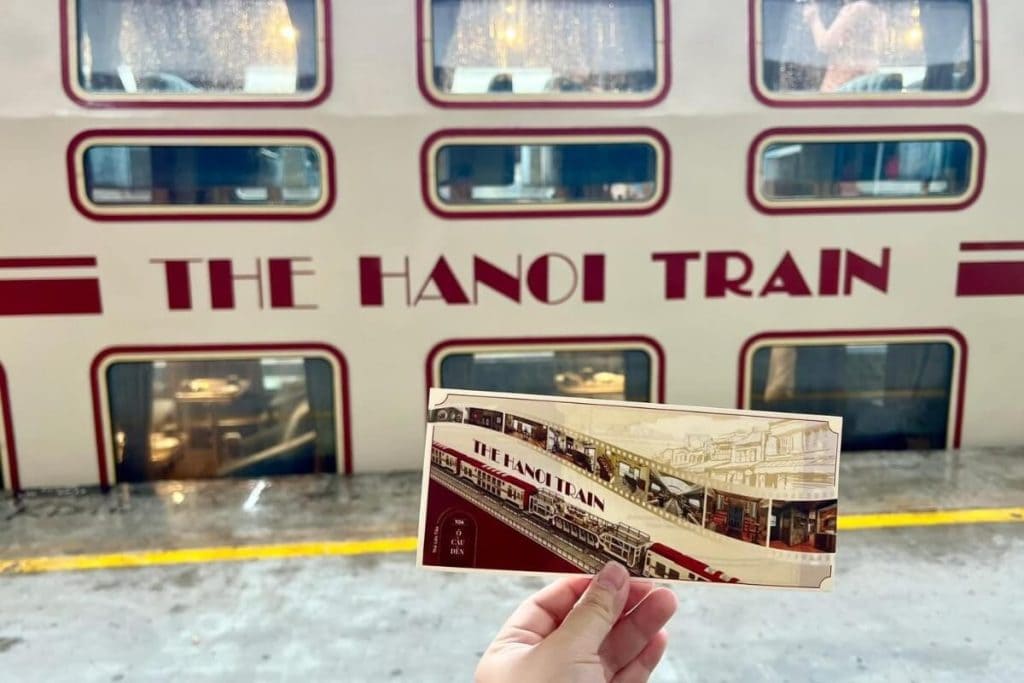
Slow travel does not necessarily mean inefficient travel. For travel agents, one of the most useful characteristics of an overnight train is its ability to combine three functions:
Transportation + overnight accommodation + travel experience
In An Vui Travel’s itinerary, travellers return from Halong Bay, transfer to Hanoi Railway Station and take an evening train towards Hue, sleeping onboard before arriving the following morning. The journey therefore connects Northern and Central Vietnam without necessarily consuming an additional daytime sightseeing period. Moreover, when guests leave Central Vietnam by train in the afternoon, stay overnight onboard and reach Ho Chi Minh City the following morning.
For travellers who value curiosity, movement and experience, those differences may be part of the appeal.
From Hanoi to Southern Vietnam: building a rail-led itinerary
The An Vui Travel itinerary shows how several types of rail experience can be combined without turning the entire holiday into a railway tour.
Around this rail framework sit very different destination experiences: Hanoi sightseeing, an overnight Halong Bay cruise, Hue’s imperial heritage, Hoi An, Ho Chi Minh City, Cu Chi and the Mekong Delta. The itinerary itself includes an overnight Halong cruise, Hue heritage sites, Central Vietnam experiences and a Mekong Delta boat journey alongside the rail sectors.
Importantly, each train sector plays a different role.
- Hanoi–Hue provides overnight movement and the feeling of crossing from Northern into Central Vietnam.
- Hue–Da Nang is primarily a scenic daytime experience, where the railway itself becomes an attraction.
- Central Vietnam–Ho Chi Minh City introduces the scale of a longer North–South rail journey while connecting the central and southern parts of the programme.
This is useful from a product-development perspective because rail does not need to replace every flight or private transfer. The strongest strategy is often selective integration: use a train where it contributes something to the traveller experience, the sustainability narrative or the overall itinerary flow.
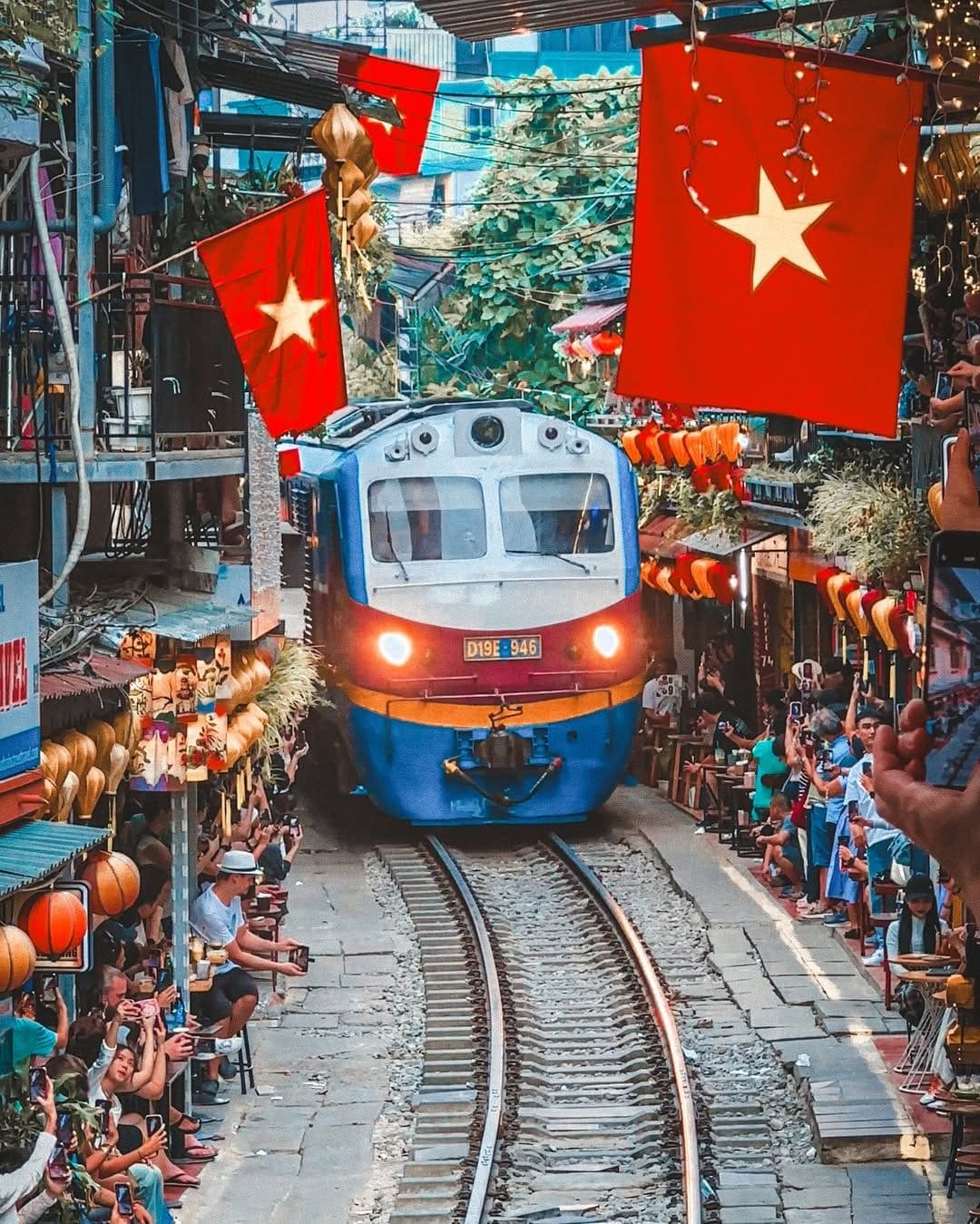
Which travellers suit an overnight train itinerary?
For travel agents, client matching is important. Overnight rail can work particularly well for experiential and cultural travellers, slow-travel clients, independent travellers, photographers, repeat visitors to Southeast Asia and guests actively seeking alternatives to standard touring programmes.
It may also appeal to sustainability-conscious travellers when environmental messaging is communicated accurately rather than exaggerated.
Age alone is not necessarily the determining factor. A middle-aged client who enjoys experiential travel may be more suitable than a younger traveller who expects high levels of privacy and comfort.
Conversely, rail may be less appropriate for guests with significant mobility requirements, clients who are highly sensitive to noise or sleeping conditions, or travellers expecting luxury-hotel standards throughout the programme.
A product-development opportunity for travel agents
A train is normally treated as an operational element hidden inside an itinerary. But once rail becomes visible in the product concept, it can help differentiate the programme.
Possible positioning includes: Vietnam by Rail, Slow Journey Through Vietnam, Vietnam: From North to South by Train, Vietnam Landscapes by Rail, or Slow Travel Vietnam.
This approach also responds to an important limitation highlighted by the travel industry’s sustainability research. A 2025 WTTC and YouGov study of more than 10,000 respondents identified a gap between travellers saying they want sustainable choices and what they ultimately purchase.
For tour operators, that suggests a practical lesson: a lower-impact option becomes more attractive when it also delivers a better story, scenery, cultural connection or distinctive travel experience.
Rail has the potential to do exactly that.
Source:
https://wttc.org/news/consumers-in-favour-of-sustainable-travel-but-cost-is-king-reveals-wttc-report
Selected overnight and scenic train journeys can create another type of product: one where travellers see more of the country between sightseeing stops, experience regional transitions and turn transportation into part of the story.
Instead of simply connecting destinations, the journey itself becomes part of the Vietnam experience — slower, more immersive and potentially more sustainability-conscious.
For travel partners exploring Vietnam by train, slow-travel programmes or more experience-led North–South itineraries, An Vui Travel can help develop rail sectors into a practical programme built around the needs of specific markets and traveller profiles.
#VietnamByTrain #SlowTravelVietnam #VietnamRailJourney #SustainableTravel #VietnamB2BTravel #VietnamDMC #HeritageTrain #AnVuiTravel
🔗 Let’s connect and grow together!
Headquarters / Sales Hub: 5th Floor, H&N Building, 329, 331 Hoang Quoc Viet Street, Cau Giay District, Hanoi, Vietnam.
Operation Offices: Vietnam (Hanoi, Danang, Ho Chi Minh), Laos (Vientiane), Cambodia (Siem Reap), Myanmar (Yangon), Thailand (Bangkok).