 English
  French
  German
  Italian
  Spanish
  Portuguese
  Japanese
  Korean
  Chinese
  Arabic
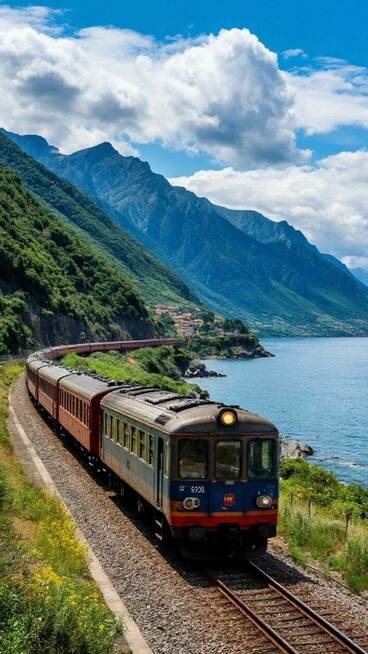
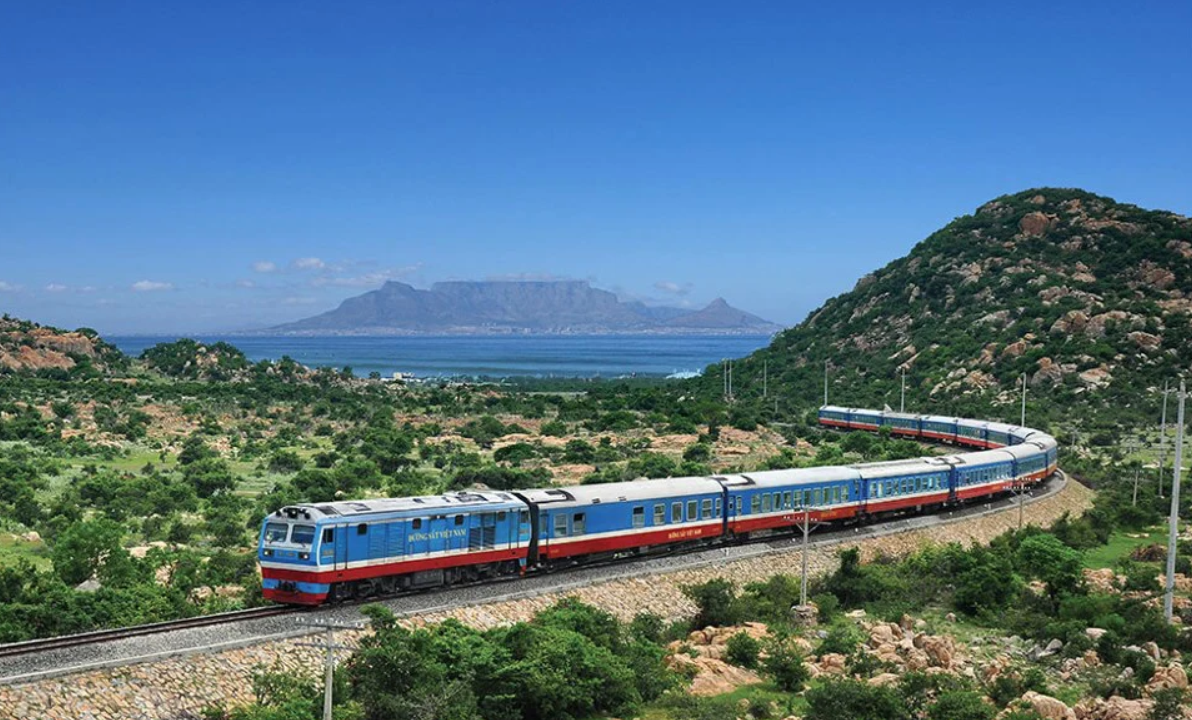
Somewhere between Hue and Da Nang, the train rounded a bend and the South China Sea opened up far below the cliffs and every traveler on board stopped scrolling. This is the Reunification Express: 1,726 kilometers of Vietnam unfolding through the window, unhurried. Across source markets from Germany to Australia, the appetite for exactly this kind of slow, meaningful travel has grown steadily, and Vietnam’s North–South railway answers it better than almost anything else in Southeast Asia. It is also one of the most underrepresented products in outbound travel portfolios today.
What Your Clients Will Actually Experience
The journey begins in Hanoi and ends in Ho Chi Minh City, but the distance between those two cities is more than kilometers. It is a study in contrast to the ancient and the electric, the misty north and the humid, relentless south.
Along the way, the train opens up the heart of Vietnam. Huế rewards those who stop: the Imperial Citadel, royal tombs along the Perfume River, a cuisine so distinct it feels like a country of its own. A short transfer from Đà Nẵng leads to Hội An, where lantern-lit streets and riverside restaurants make upselling feel effortless. Nha Trang offers a natural pause before the final push south clear water, fresh seafood, resort-grade decompression.
And then there is the train itself. At every station, vendors board with bánh mì and hot noodle soups. Vietnamese families travel this route for reunions, sharing food and laughter across the aisle. Fellow passengers exchange phone numbers before the next stop. This is not sterile transit. It is a moving window into everyday Vietnamese life and that is precisely what today’s traveler is paying for.
The Case for the Rails
The case for the Reunification Express is not just romantic. It holds up on practical comparison.
What the Cabin Actually Feels Like
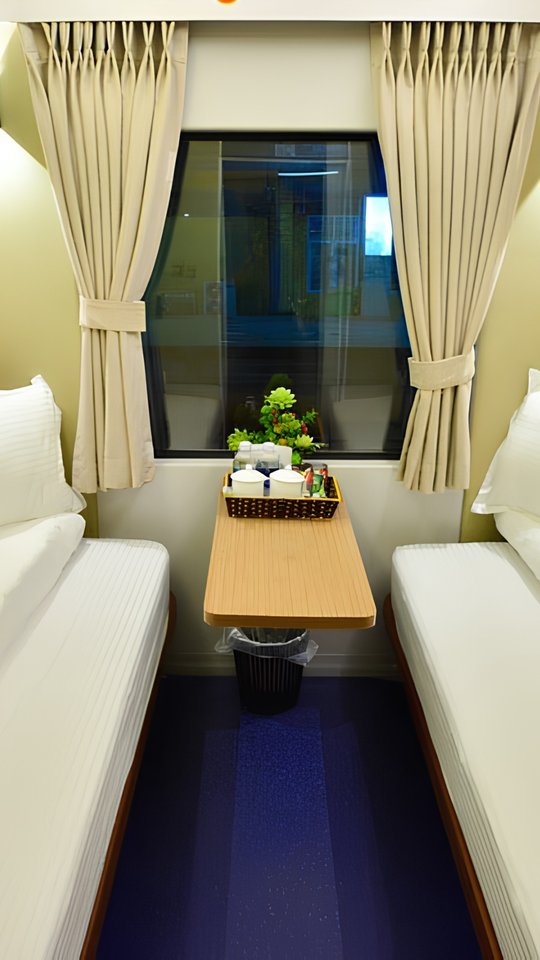
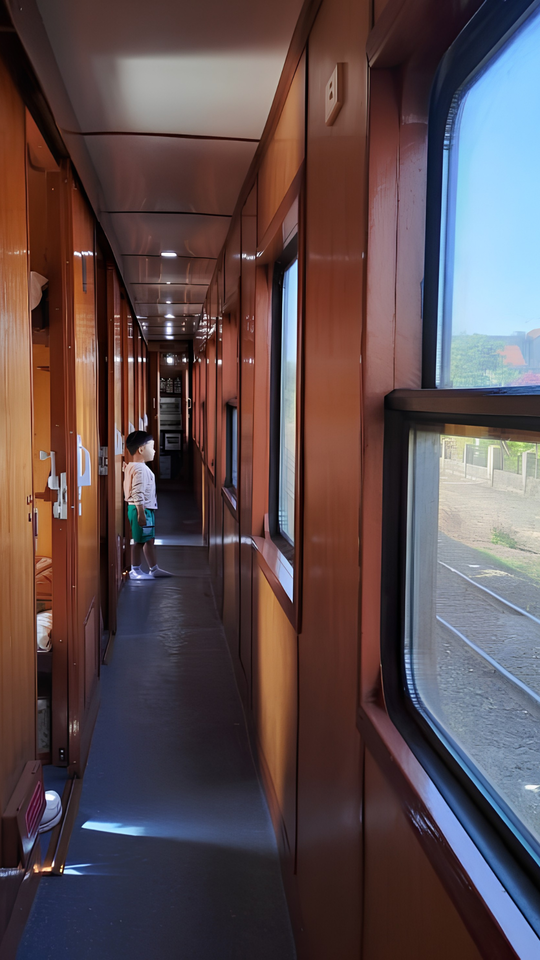
Riders who return to the line after a few years away tend to say the same thing: it is cleaner and more comfortable than they remembered. Recent reviews describe spacious carriages, air conditioning that runs steady and cold without being harsh, and reclining seats that have been upgraded with smoother, more reliable adjustment mechanisms. Staff attentiveness has improved too. One traveler noted that within minutes of raising a phone to take a photo in the carriage, an attendant approached politely to ask if any help was needed. These are small details, but they are the ones that determine whether a long journey feels tolerable or genuinely pleasant.
A Route With Built In Stops
Unlike a single long haul flight, the railway allows travelers to break the journey at any major station, buy a fresh ticket, and continue days later. A common pattern among independent travelers is to fly into Ho Chi Minh City, then ride the rails north in stages: an overnight sleeper to Nha Trang for the beach, another to Đà Nẵng for Hội An, another to Huế for the imperial sites, and a final overnight leg into Hanoi. What looks like one 32 hour ride on paper becomes, in practice, a flexible multi-city itinerary that never requires a single domestic flight.
Priced Below the Alternative
A four berth, air conditioned soft sleeper cabin from Saigon to Hanoi typically runs between 70 and 75 US dollars, with hard sleeper options priced lower still. Compared against the cost of an equivalent one way domestic flight, plus baggage fees and airport transfers, the train is frequently the cheaper option, and it includes a bed for the night. There is no combined through ticket as in parts of Europe, so each leg must be booked separately, but that constraint is also what makes stopovers so straightforward to plan.
Scenery a Plane Window Cannot Match
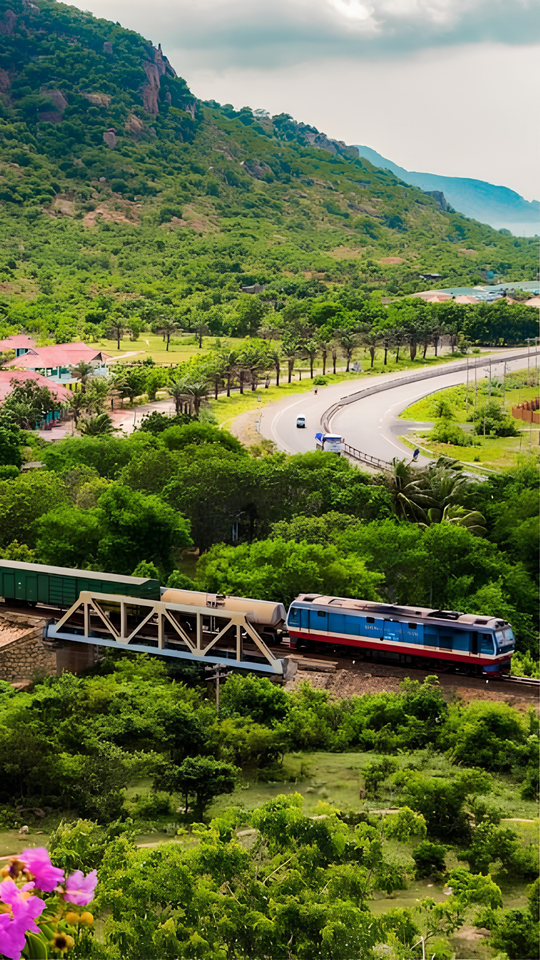
The most cited stretch on the entire line is the run over the Hải Vân Pass between Huế and Đà Nẵng, where the track clings to the cliffside above the South China Sea. Further north, the line cuts through the karst landscape and emerald rice fields around Ninh Bình before the terrain folds into jungle. Travel writers who have ridden the full route consistently describe the same arc: river delta, mountain pass, coastline, delta again, each one visible only because the train moves slowly enough to take it in.
The Lower Carbon Option
Train travel produces meaningfully less carbon per passenger than domestic flights covering the same distance. For travelers from markets where sustainable tourism is already a booking criterion, particularly across Western Europe, this is no longer a footnote. It is becoming a stated reason for choosing the 30 hour train over the 90 minute flight.
Sources:
https://vnexpress.net/duong-sat-bac-nam-toi-bat-ngo-vi-trai-nghiem-di-tau-bac-nam-5079781.html
https://vnexpress.net/tau-bac-nam-la-cach-tot-nhat-kham-pha-viet-nam-4577548.html
https://vietnam.travel/node/1671
https://medium.com/adventures-travel/32-hours-on-the-reunification-express-be8433b8a53
https://ecobnb.com/blog/2026/04/train-travel-vietnam-sustainable/
Building Value for Travel Partner
Each of these advantages converts directly into something a partner business can act on. The Reunification Express is not a product travelers book and arrange well on their own ticket classes, segment timing, station transfers, and stop-off sequencing all require local knowledge, and getting it wrong means a client stranded on a platform at midnight or 30 hours in a hard-seat carriage they did not expect. That gap between a complex booking and a seamless trip is exactly where partner value is created.
Because the railway naturally breaks into segments, it anchors a 10–14 day Vietnam itinerary with built-in stopovers each one an opportunity for guided city tours, a cooking class in Hội An, a DMZ day trip from Huế, a boat excursion in Nha Trang, or an accommodation upgrade. Lonely Planet’s ranking and the wave of international press coverage it generated have already done a portion of the persuasion work; what remains is execution, and execution is where ground operators earn trust.
If you are ready to add one of Asia’s great journeys to your portfolio, reach out via WhatsApp for a consultation or request our North–South Train Journey brochure, including route maps, cabin class comparisons, sample itineraries, and agent net rates.
#anvuitravel #B2Btravelpartnerships #traveltovietnam #vietnamtour #reunificationexpress #vietnamtravelagent #localdmcvietnam #sustainabletourismvietnam #vietnamtravelexperts