 Korean
  English
  French
  German
  Italian
  Spanish
  Portuguese
  Japanese
  Chinese
  Arabic
For decades, Vietnam’s travel narrative was written around its landscapes: the limestone karsts of Halong Bay, the terraced rice fields of Sapa, the neon churn of Ho Chi Minh City. These remain the country’s visual signature, and rightly so. But for outbound agents building itineraries for discerning European and Middle Eastern travelers, the landscape is no longer the differentiator. It’s the backdrop. What clients increasingly ask for, often without the vocabulary to name it precisely, is proximity to how people actually live.
This shift matters commercially, not just aesthetically. A client who returns from a trip having harvested tea alongside a local farmer, or learned to fold a spring roll under the instruction of a home cook, tells a different story than one who simply saw a temple from a coach window. That story is what generates referrals, repeat bookings, and the kind of five-star reviews that no marketing budget can manufacture. For agents, the ability to source and sell genuine cultural access is fast becoming a core competitive asset rather than a value-add.
Why “Authentic” Needs to Mean Something Specific
The word authentic has been diluted by overuse in tourism marketing, so it’s worth being precise about what separates a genuine cultural encounter from a staged one. Three criteria tend to hold up:
- The interaction happens on the community’s terms and schedule, not a tour operator’s script;
- The exchange is mutually beneficial, meaning the host community has an economic and social stake in it continuing;
- The experience reveals a skill, tradition, or daily rhythm that would exist whether or not tourists were present.
Itineraries built around these criteria consistently outperform generic “cultural stop” inclusions in guest satisfaction data, because travelers can sense the difference between participation and performance.
Daily Life in Hanoi’s Hidden Haven: Ri Village, Hanoi
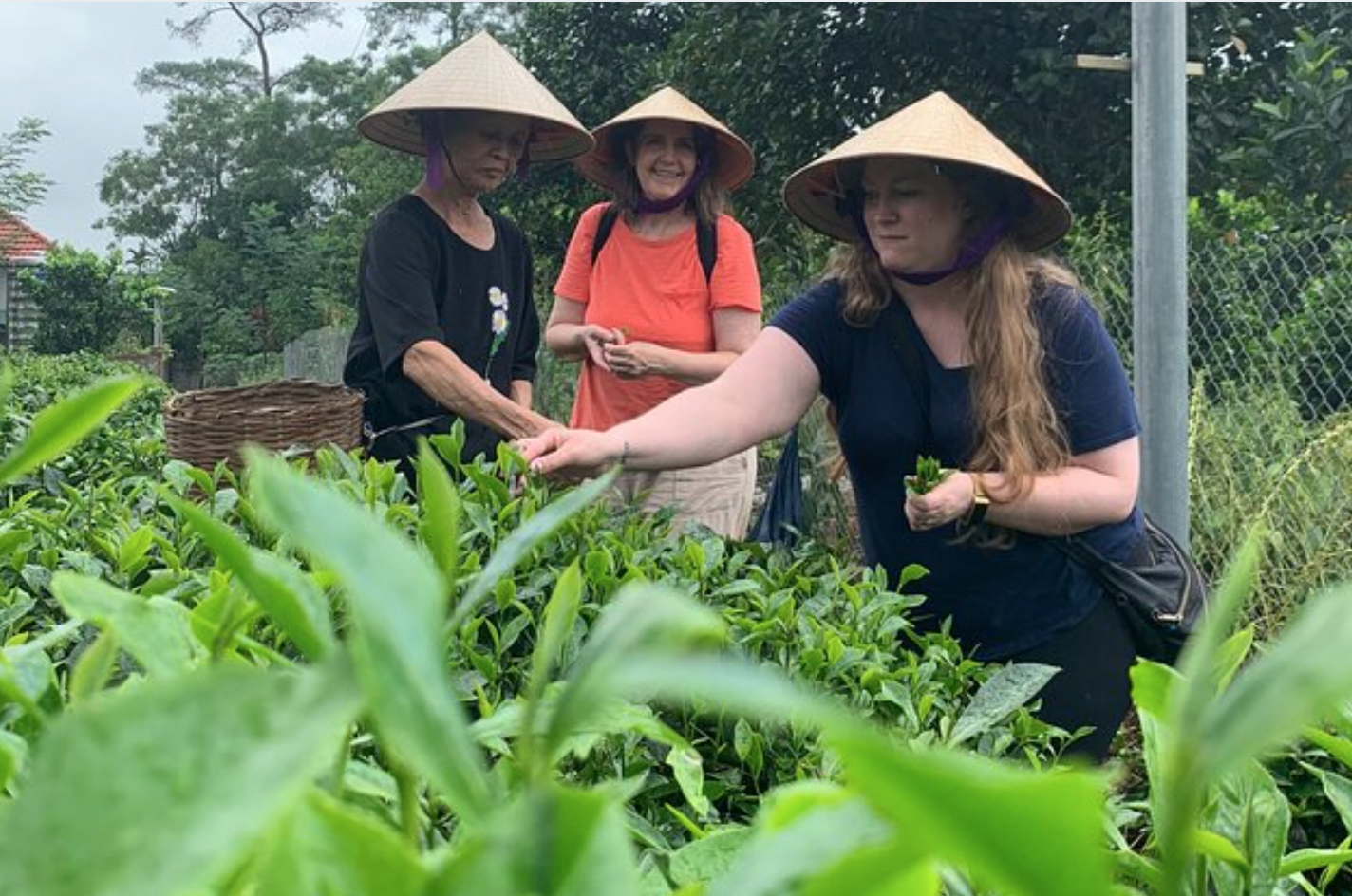
Roughly two hours from Hanoi’s Old Quarter, in a hillside village inhabited largely by the Muong ethnic minority, a family-run tea plantation has been cultivating the same slopes for 30 years. This is not a demonstration garden built for visitors; it is a working plantation that happens to welcome them. Guests are handed a woven basket and shown, hands-on, how to select and pluck the tender leaf sets that determine tea quality, a skill that takes local pickers years to refine, and that visitors typically manage, with good humor, in about twenty minutes.
The experience deepens afterward with a traditional Muong herbal foot soak, prepared using foraged roots and leaves according to methods passed down through generations of local healers. For clients arriving from fast-paced European or Gulf itineraries, this pairing of physical activity and restorative ritual tends to register as one of the most memorable inclusions of the entire trip, not because it is exotic, but because it is unhurried, tactile, and clearly rooted in a place rather than assembled for one.
Central Vietnam: Thuy Bieu and the Kitchen as Classroom
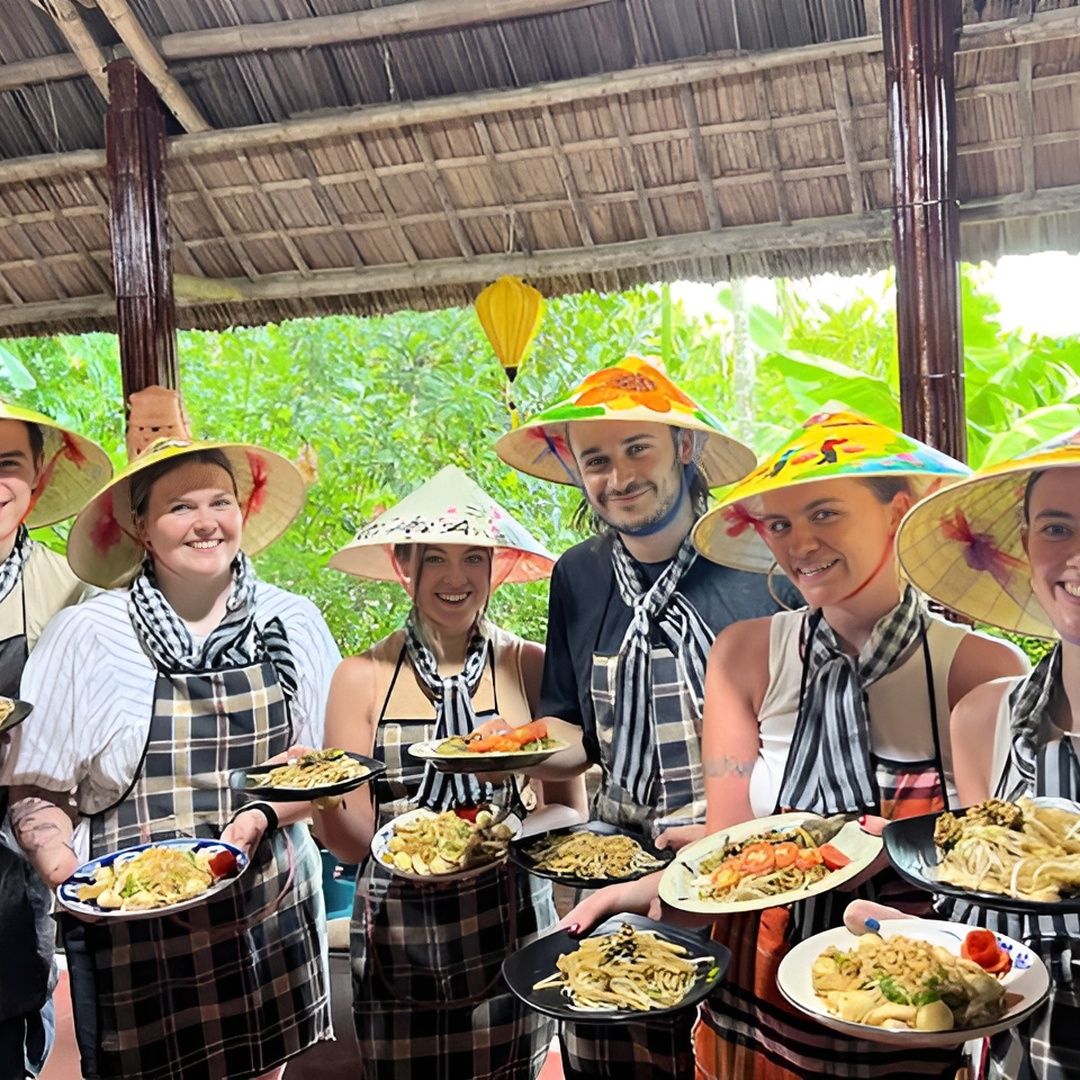
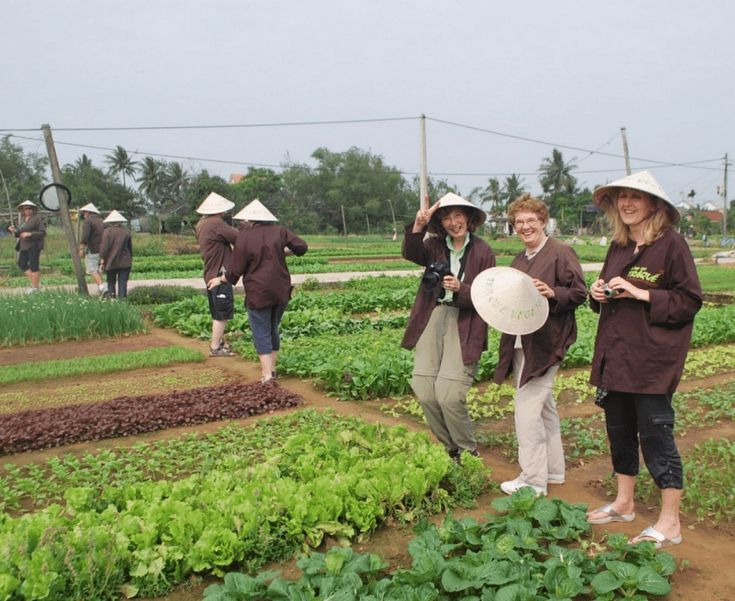
Further South, on the banks of the Perfume River outside Hue, the eco-village of Thuy Bieu offers a different register of the same principle. Known historically for its pomelo orchards and its role as a retreat for Nguyen Dynasty nobility, the village today hosts small-group cooking classes led by local families in their own home kitchens. Guests cycle or walk through orchards and vegetable gardens to gather ingredients before learning to prepare central Vietnamese specialties, often including banh khoai or bun bo Hue, under direct guidance rather than passive demonstration.
What makes this inclusion valuable for an agent’s proposition is its layering: it combines a scenic, low-impact activity (a countryside cycle), a sensory and educational component (the cooking class itself), and a natural, unforced opportunity for conversation with a host family. It is precisely the kind of morning or afternoon module that elevates a standard Hue itinerary, typically anchored around the Imperial City and royal tombs, into something with genuine emotional texture.
What This Means for Package Design
Neither of these experiences functions well as an isolated add-on dropped into an otherwise conventional itinerary. Their value comes from sequencing: pairing a cultural immersion morning with unstructured time in the afternoon, or positioning a hands-on activity like tea harvesting as a counterpoint to a more passive sightseeing day. Agents who think in terms of pacing and emotional arc, rather than a checklist of sights, tend to see stronger conversion on premium packages, particularly with clients who have already done the standard circuit on a previous visit to Southeast Asia.
Access to a family’s tea plantation, or a seat in a home kitchen in Thuy Bieu, depends entirely on relationships built over years, not transactions arranged the week before departure. This is where An Vui Travel – a trusted local DMC becomes decisive rather than incidental.
An Vui Travel has spent years cultivating precisely these relationships across northern and central Vietnam, working directly with families in Ri Village, Thuy Bieu, and similar communities to ensure visits are welcomed and well-paced. For agents, this translates into itineraries that can be sold with confidence, knowing the experience described in the proposal is the one the client will actually receive.
If you’re refining your Vietnam program for the coming season, we’d welcome the chance to walk you through these experiences in more detail, including a familiarization visit to Ri Village and Thuy Bieu, so you can evaluate the product firsthand before presenting it to your clients.
🔗 Let’s connect and grow together!
Headquarters / Sales Hub: 5th Floor, H&N Building, 329, 331 Hoang Quoc Viet Street, Cau Giay District, Hanoi, Vietnam.
Operation Offices: Vietnam (Hanoi, Danang, Ho Chi Minh), Laos (Vientiane), Cambodia (Siem Reap), Myanmar (Yangon), Thailand (Bangkok).