 Spanish
  English
  French
  German
  Italian
  Portuguese
  Japanese
  Korean
  Chinese
  Arabic
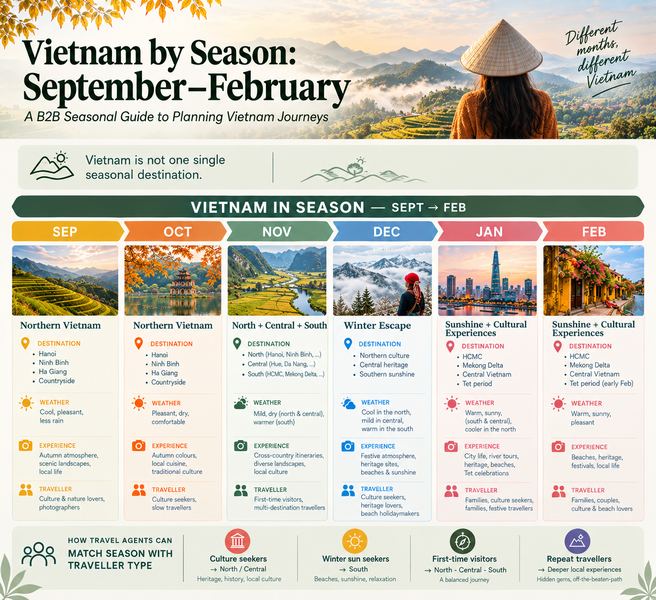
Vietnam is often described as a year-round destination, but for travel professionals, this description only tells part of the story. The country’s long geography creates significant differences in weather and travel conditions between the North, Central and South, meaning that the same itinerary does not necessarily deliver the same quality of experience throughout the year. For international travel agents, understanding these seasonal differences is therefore not simply a matter of advising clients about the weather. It is an important part of product design, customer segmentation and revenue planning.
Vietnam stretches more than 1,600 kilometres from north to south, creating significant differences in climate and travel conditions between regions. While Northern Vietnam enters its autumn and winter period from September onwards, Central Vietnam moves into a wetter season, while Southern Vietnam gradually transitions into its drier and sunnier months. These differences give travel businesses an opportunity to adapt their products according to season rather than relying on one standard itinerary throughout the year. Instead of asking which month is the best time to visit Vietnam, travel agents can ask which version of Vietnam is most suitable for their clients during that particular month.
For international partners, this is where working with a local DMC can make a meaningful difference. A destination management company on the ground understands not only the headline climate patterns, but also how seasonality affects transportation, sightseeing, local experiences, accommodation choices and the overall rhythm of an itinerary. At An Vui Travel, we use this local knowledge to help travel partners design Vietnam journeys that are aligned with both seasonal conditions and traveller expectations.
September and October: Positioning Northern Vietnam Around Autumn and Harvest
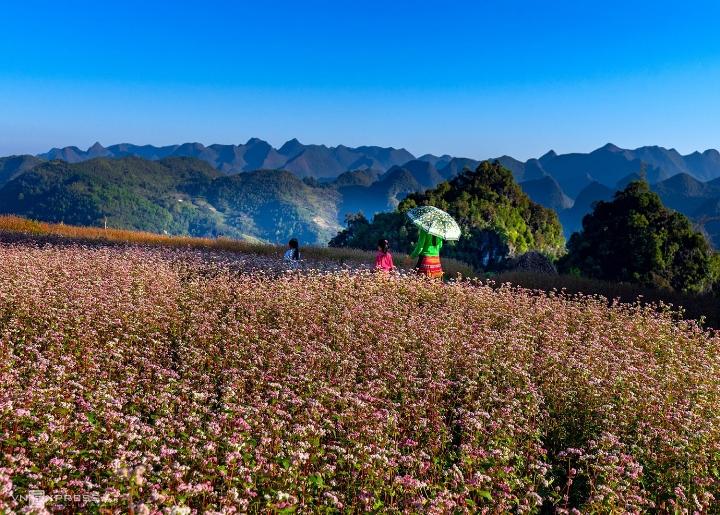
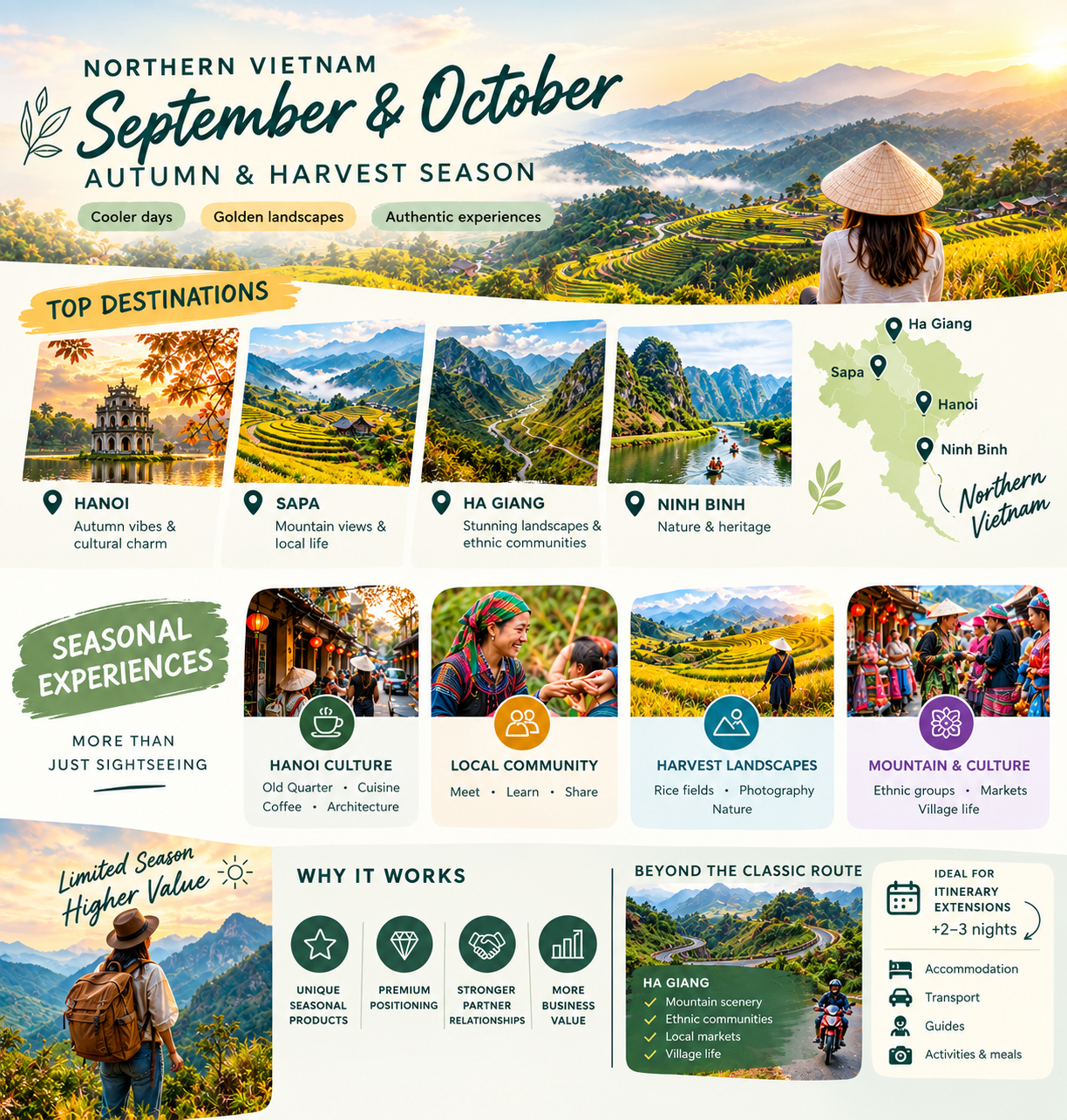
September and October are among the most attractive months for Northern Vietnam. Hanoi moves into its autumn period, with more comfortable temperatures and a distinctive seasonal atmosphere, while the northern highlands offer opportunities to experience landscapes associated with the rice harvest. Ha Giang, Ninh Binh, Sapa and the countryside surrounding Hanoi can therefore become particularly valuable components of an autumn-focused Vietnam itinerary.
For travel agents, the commercial opportunity lies in turning the season itself into part of the travel product. Instead of presenting Hanoi simply as a destination for sightseeing, it can be positioned as an autumn cultural experience combining the Old Quarter, local cuisine, Vietnamese coffee, traditional architecture and slower neighbourhood exploration. The experience becomes more distinctive when travellers are given opportunities to interact with local communities rather than simply moving between major attractions.
This is where local destination knowledge becomes particularly valuable. A local DMC as An Vui Travel can assess how the season changes the character of each destination and recommend experiences that complement rather than compete with one another. For B2B partners, this means the itinerary can be designed around the quality of the experience rather than simply filling each day with a list of attractions.
The same principle applies to Northern Vietnam’s rural and mountainous areas. The golden rice landscapes of the harvest season provide a strong visual and emotional proposition for international travellers interested in photography, nature and authentic cultural experiences. A standard mountain excursion can therefore be repositioned as a seasonal journey focused on rural landscapes, local food, village life and cultural encounters.
This creates a potential premium positioning for travel agents. Seasonal experiences are naturally more difficult to replicate outside their ideal period, which gives businesses an opportunity to build limited-season products rather than competing purely on itinerary price. A traveller who is specifically interested in experiencing Vietnam during harvest season may be more willing to choose a specialised itinerary with carefully selected accommodation, guides and experiences.
For An Vui Travel as a local DMC in Vietnam, this seasonal approach also means looking beyond the well-known highlights and connecting international partners with experiences that reflect the destination at a particular moment. The role of a DMC is not simply to arrange the components of a tour, but to translate local knowledge into a journey that works commercially and operationally for the travel agent.
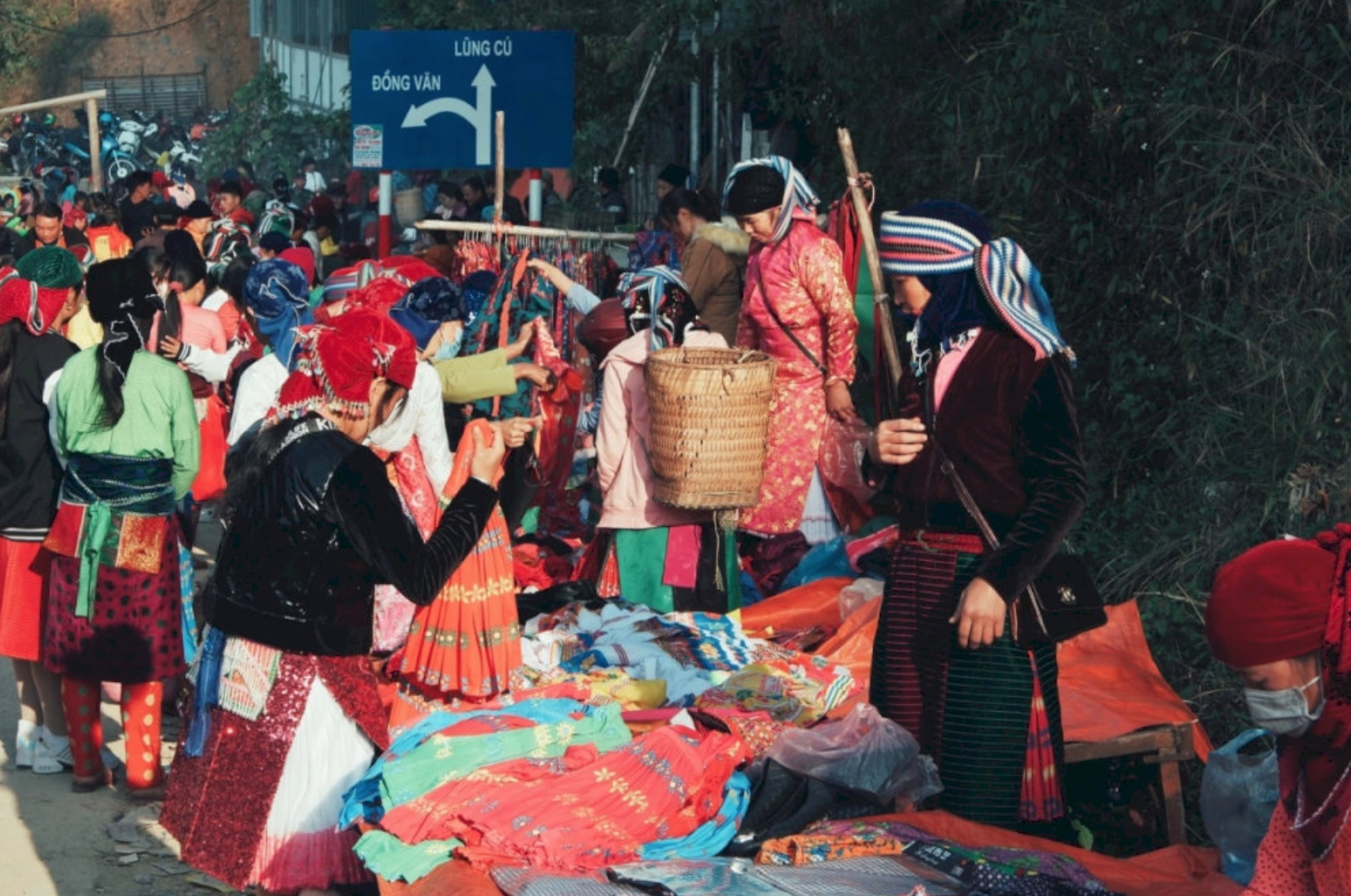
Ha Giang can also play an important role during this period. Rather than marketing the destination purely as a motorbike adventure, travel agents can develop a broader experience around mountain scenery, ethnic communities, local markets and village life. This makes the destination relevant not only to adventure travellers but also to repeat visitors who have already experienced the classic Vietnam itinerary and are looking for a deeper cultural perspective.
From a business perspective, destinations such as Ha Giang can also function as itinerary extensions. A client initially considering a ten-day Vietnam journey may be interested in extending the trip by two or three nights when offered a distinctive northern mountain experience. The additional nights generate value across accommodation, transportation, guiding, activities and meals while simultaneously increasing the overall perceived depth of the itinerary.
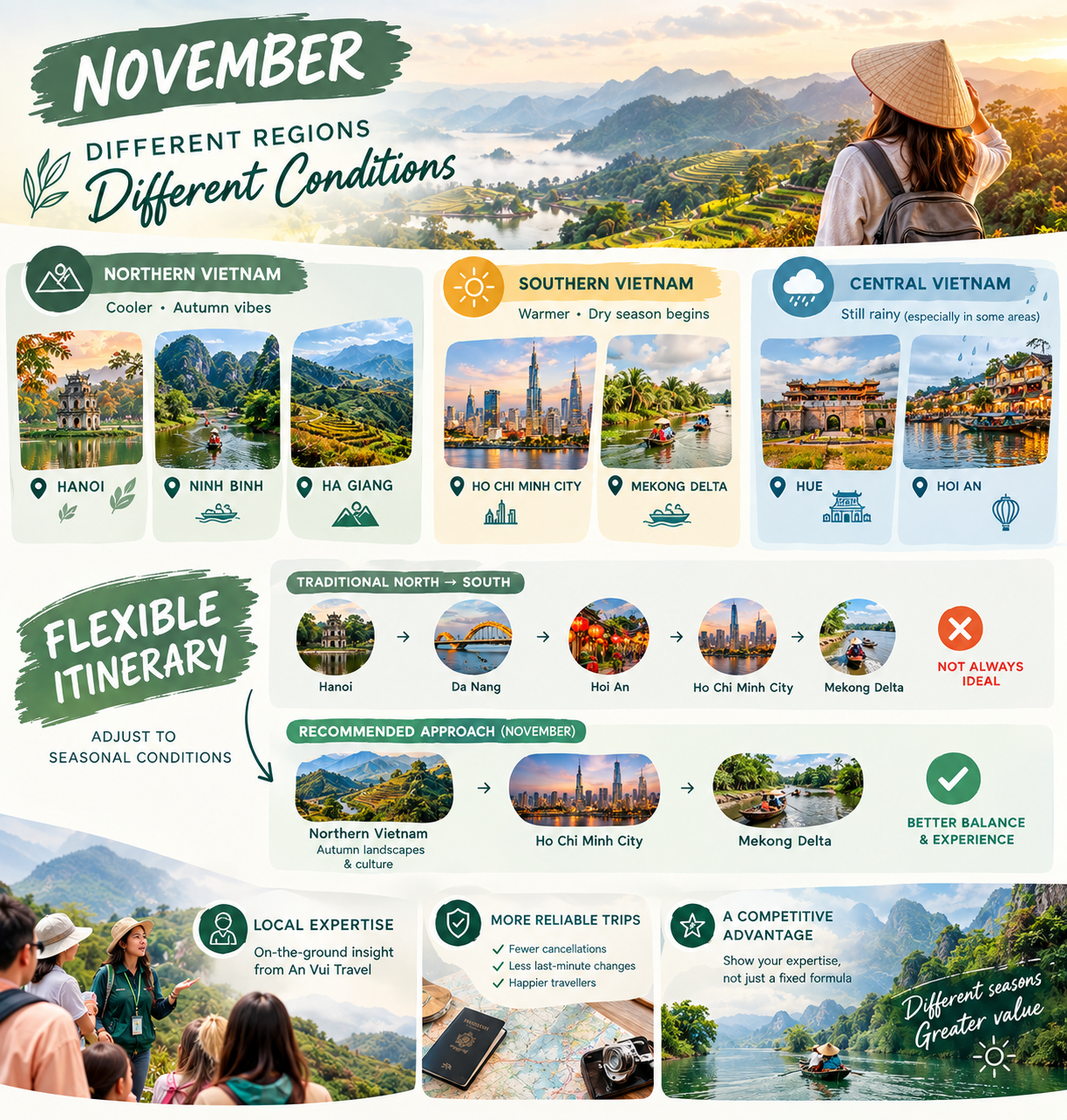
November: A Month for Smarter Itinerary Planning
November is a transition month and requires a more sophisticated approach to itinerary design. Northern Vietnam remains attractive, particularly for travellers interested in Hanoi, Ninh Binh and Ha Giang, while Southern Vietnam begins moving towards its more favourable dry season. Central Vietnam, however, can still experience significant rainfall, particularly in destinations such as Hue and Hoi An.
This makes November an important example of why travel agents should avoid applying the same North to South itinerary throughout the year. A conventional Vietnam route may still be possible, but the allocation of nights and experiences should be adjusted according to seasonal conditions.
For example, an agent may choose to place greater emphasis on Northern Vietnam before continuing to Ho Chi Minh City and the Mekong Delta. This creates a journey that combines autumn landscapes and cultural experiences in the North with warmer conditions and river-based experiences in the South.
This kind of flexibility is one of the practical advantages of working with a local DMC as An Vui Travel. Because the destination team is operating within Vietnam throughout the year, it can provide partners with on-the-ground insight when planning routes, selecting experiences and adjusting programmes around seasonal conditions. For an overseas travel agent, that local perspective can help turn a standard itinerary into a more resilient and relevant product.
The commercial benefit of this approach goes beyond customer satisfaction. A weather-conscious itinerary can reduce the likelihood of cancelled outdoor activities, last-minute itinerary changes and disappointed travellers. For international travel businesses, operational reliability is an important part of product quality because it can influence reviews, referrals and repeat bookings.
November can therefore be viewed as a month in which itinerary expertise becomes a competitive advantage. Instead of selling destinations according to a fixed formula, travel agents can demonstrate their knowledge by adjusting the journey according to regional conditions.
December: Creating a Vietnam Winter Escape
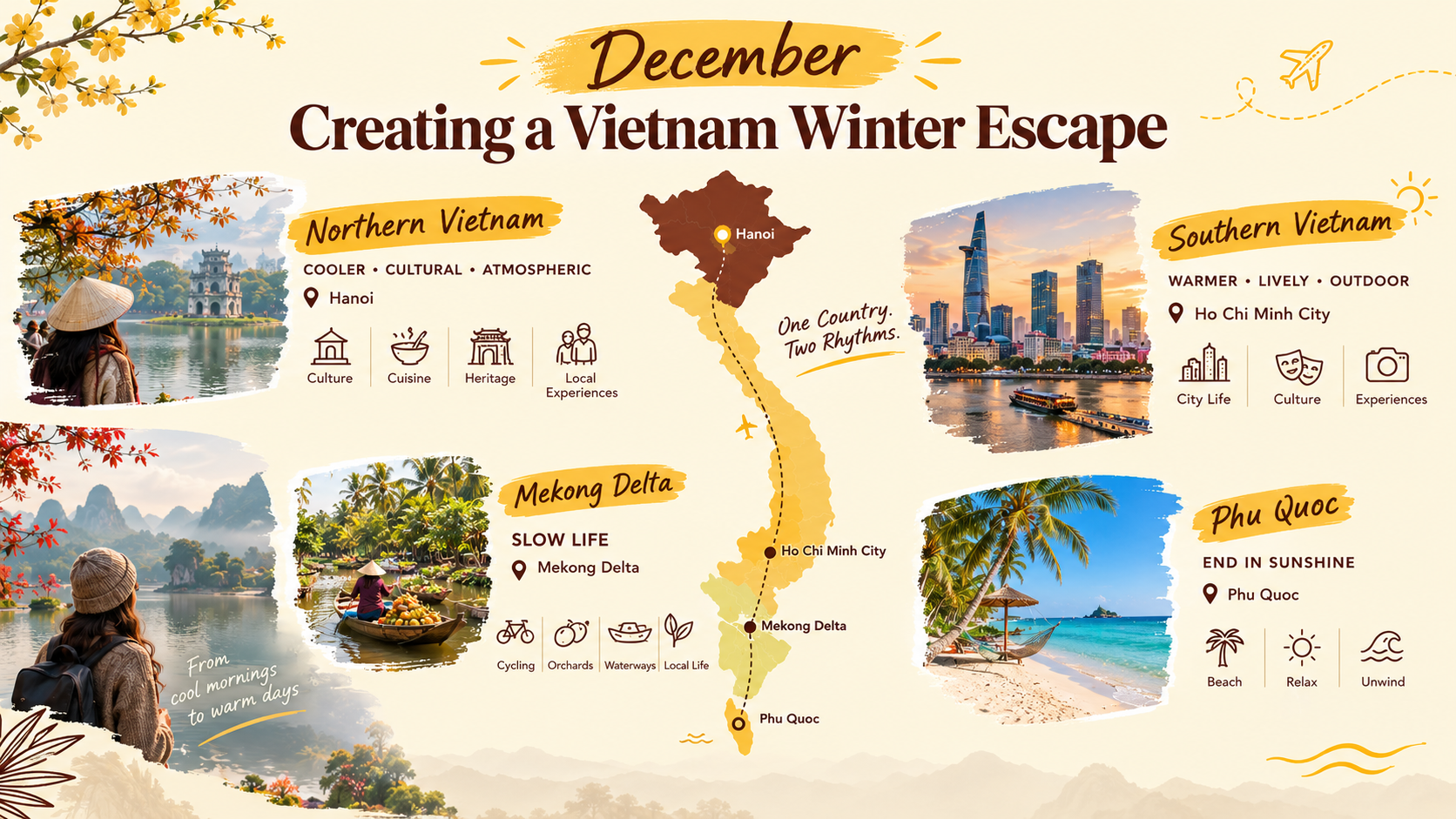
December presents a particularly strong opportunity for European travel markets because it creates a clear contrast between Northern and Southern Vietnam. Northern destinations become cooler and more atmospheric, while Southern Vietnam enters a warmer and generally drier period.
This contrast allows travel businesses to develop a winter escape concept rather than simply marketing Vietnam as a generic holiday destination. Hanoi can be positioned around culture, cuisine, heritage and local experiences, while Ho Chi Minh City and the Mekong Delta can provide warmer weather and outdoor activities.
For European travellers looking for an alternative to winter in their home countries, Southern Vietnam can become particularly attractive. Ho Chi Minh City provides an urban and cultural dimension, while the Mekong Delta introduces a completely different environment through waterways, fruit orchards, cycling, local workshops and community-based experiences. Phu Quoc can then be considered for travellers looking to finish their journey with a period of beach relaxation.
For a local DMC as An Vui Travel, this regional contrast creates an opportunity to build journeys around different travel motivations within the same country. Rather than asking travellers to accept the same experience everywhere, An Vui Travel can help travel partners connect the cultural character of the North with the warmth and slower rhythm of the South, creating a journey that feels varied while remaining operationally coherent.
This combination also creates opportunities for upselling. A basic city-and-culture itinerary can be extended with a Mekong Delta stay or a beach extension, allowing agents to increase the overall booking value while offering a logical progression in the traveller experience.
The important point is that upselling should be connected to the client’s motivation. A European traveller looking for winter sun may respond better to a southern extension, while a culturally motivated traveller may prefer additional time in Hanoi or a deeper exploration of Northern Vietnam. The commercial opportunity therefore comes from matching the additional product to the traveller rather than simply adding services.
January: Combining Cultural Depth with Winter Sun
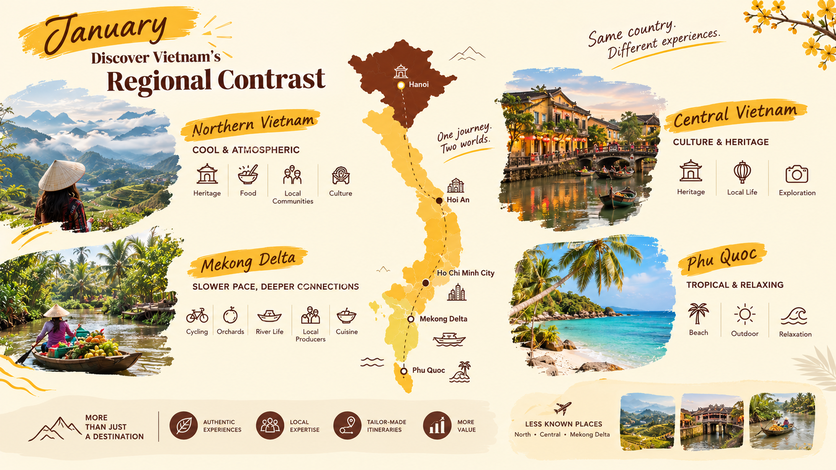
January highlights one of Vietnam’s strongest characteristics as a long-haul destination: regional contrast. Northern Vietnam can be cool and atmospheric, particularly in mountainous areas, while Southern Vietnam remains warm and attractive for outdoor experiences.
For travel agents, this creates an opportunity to design itineraries around contrast rather than trying to make every destination deliver the same type of experience. Hanoi and Northern Vietnam can focus on heritage, food, local communities and cultural discovery, while the South can be positioned around tropical landscapes, river life and relaxation.
The Mekong Delta is particularly suitable for this strategy because it allows travel businesses to introduce a slower pace into an otherwise busy itinerary. Cycling through rural areas, visiting orchards, travelling by small boat, meeting local producers and experiencing regional cuisine can create a more intimate experience than a conventional sightseeing excursion.
These are the types of experiences where local destination expertise becomes especially important. Knowing which communities to visit, how long to spend in a destination, which activities genuinely reflect local life and how to connect them into a comfortable route can significantly affect the quality of the final product. For an international travel agent, this local knowledge can be difficult to replicate from overseas research alone.
From a commercial perspective, this type of product can increase both trip duration and perceived value. Travellers who initially book a classic Vietnam itinerary may be willing to add one or two nights when the additional experience offers something substantially different from the main route. This creates opportunities for travel agents to increase average booking value without relying exclusively on higher room categories or more expensive hotels.
January is also a useful period for targeting travellers who have already visited Vietnam. Rather than repeating the major destinations, agents can introduce less conventional experiences in the North, Central region or Mekong Delta. For a DMC such as An Vui Travel, this creates room to work with partners on more customised programmes that move beyond the standard first-time visitor circuit and introduce deeper local experiences.
February: Sunshine, Central Vietnam and the Cultural Value of Tet
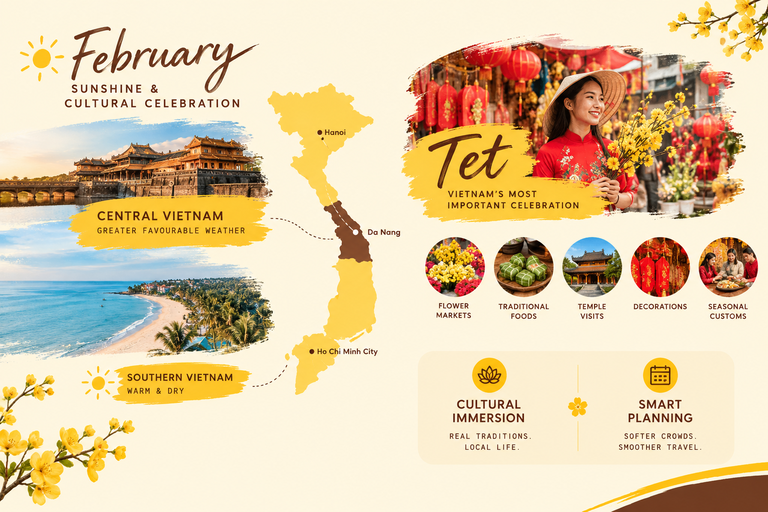
February marks another important transition in Vietnam’s travel calendar. Central Vietnam generally begins moving into a more favourable period, while Southern Vietnam continues to offer warm and relatively dry conditions. Depending on the timing of the Vietnamese Lunar New Year, February can also provide travellers with an opportunity to experience Tet, Vietnam’s most important traditional celebration.
Tet can be particularly valuable for cultural tourism because it allows international visitors to encounter traditions that are closely connected to family, community and Vietnamese identity. Flower markets, traditional foods, temple visits, decorations and seasonal customs can provide a more meaningful cultural experience than standard sightseeing.
For travel agents focused on experiential and cultural travel, Tet can therefore become more than a calendar event. It can become the central narrative of a seasonal product. However, this requires careful local planning because the holiday can affect transportation, accommodation demand, restaurant operations and the opening hours of businesses and attractions.
This is another area where An Vui Travel’s role becomes particularly relevant. An overseas travel agent may understand the cultural significance of Tet, but a destination partner on the ground can help translate that knowledge into a workable itinerary, taking into account operational realities and the traveller’s desired level of cultural immersion.
For the right traveller, Tet can become a premium cultural proposition because it provides access to a side of Vietnam that cannot be experienced in the same way throughout the year. For travellers who prioritise operational convenience, travelling immediately before or after the main holiday period may be more appropriate.
This distinction is commercially important because it allows agents to create different products around the same destination and calendar period. One can focus on cultural immersion, while another can focus on convenience and a smoother travel experience.
Sources:
https://vietnam.travel/vi/things-to-do/weather-and-climate-vietnam
http://160.191.85.82:9191/things-to-do/vietnam-monthly-guide
http://160.191.85.82:9191/things-to-do/five-key-trends-defining-global-tourism-2026
https://vietnam.travel/vi/things-to-do/vietnam-new-summer-escape-replacing-europe
Why Seasonal Product Design Matters for B2B Travel Businesses
For international travel agents and tour operators, Vietnam’s regional climate diversity can be turned into a commercial advantage. Rather than seeing seasonality as a challenge that limits where travellers can go, businesses can use it to create more targeted products throughout the year.
A well-designed seasonal strategy can support higher average booking values through itinerary extensions and premium experiences. It can also improve conversion by giving customers clearer reasons to travel at particular times, while helping agents differentiate their products from standard Vietnam packages that remain unchanged throughout the year.
More importantly, seasonal product design supports a move away from price-based competition. When an itinerary is built around a specific landscape, cultural moment or local experience, the agent is selling something more difficult to compare purely on price.
This is particularly relevant for travellers seeking slow travel and deeper cultural experiences. Instead of trying to maximise the number of destinations visited, travel businesses can focus on creating meaningful interactions and carefully timed experiences that justify a higher perceived value.
For An Vui Travel, this philosophy reflects the role of a trusted local DMC: connecting international travel businesses with Vietnam through destination expertise, local relationships and practical itinerary knowledge. The objective is not simply to deliver the services included in a programme, but to help partners create journeys that feel authentic to the destination while remaining commercially viable and operationally dependable.
From Destination Knowledge to Product Advantage
The most effective seasonal strategy begins with understanding that Vietnam is not one uniform destination. It is a collection of different regions, climates, cultures and experiences that can be combined differently throughout the year.
For travel agents, the planning process can therefore move from season to destination, from destination to experience and from experience to traveller motivation. The final step is to consider how that product can be positioned, extended or upgraded to create greater commercial value.
At An Vui Travel, our approach is built around this understanding of Vietnam as a destination that should be experienced differently according to season, region and traveller profile. By working closely with international travel agents and tour operators, a local partner as An Vui can help transform destination insights into practical travel products, from classic first-time journeys to slow travel programmes and deeper local experiences.
Sell the Right Vietnam at the Right Time
Vietnam does not have one single travel season, and there is no universal answer to the question of when travellers should visit. The more valuable question for travel agents is which part of Vietnam, which experience and which itinerary structure will create the strongest proposition during a particular period.
September and October provide opportunities to build premium Northern Vietnam products around autumn, harvest landscapes and mountain culture. November rewards agents who understand regional differences and can design more weather-conscious itineraries. December and January create strong opportunities for winter-sun products and longer journeys combining culture with tropical experiences. February brings together improving conditions in Central Vietnam, continued sunshine in the South and the cultural significance of Tet.
Seasonality should not simply determine where travellers go. It should influence what products are created, how they are positioned, which customers they target and what additional experiences can be offered.
An Vui Travel with destination knowledge, local networks and on-the-ground operational understanding, which can help international travel businesses navigate seasonal changes while developing experiences that are relevant, authentic and commercially viable.
#VietnamBySeason #VietnamTravel #B2BTravel #TravelAgents #VietnamDMC #AnVuiTravel
🔗 Let’s connect and grow together!
Headquarters / Sales Hub: 5th Floor, H&N Building, 329, 331 Hoang Quoc Viet Street, Cau Giay District, Hanoi, Vietnam.
Operation Offices: Vietnam (Hanoi, Danang, Ho Chi Minh), Laos (Vientiane), Cambodia (Siem Reap), Myanmar (Yangon), Thailand (Bangkok).