 German
  English
  French
  Italian
  Spanish
  Portuguese
  Japanese
  Korean
  Chinese
  Arabic
How Is Technology Changing the Way Travelers Book Flights?
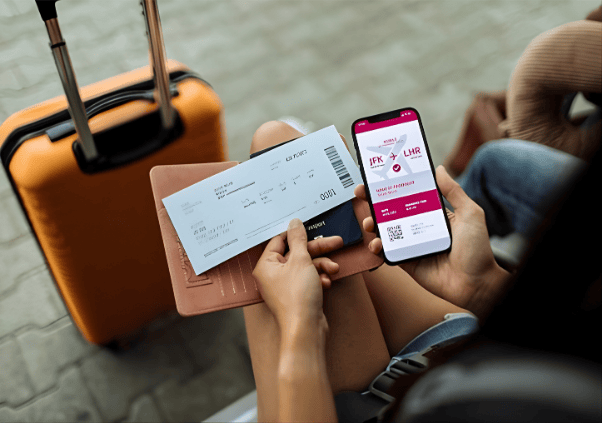
Technology has transformed flight booking into a highly dynamic, AI-driven ecosystem, replacing traditional offline and agent-assisted models with real-time, data-powered decision-making environments. In Vietnam, over 70–75% of travelers now begin their journey online, according to recent tourism and digital adoption reports, reflecting a consistent upward trend compared to pre-2020 levels and reinforcing the dominance of digital-first behavior.
This shift is driven by the ability to instantly compare:
- Flight prices and schedules
- Baggage policies and ancillary services
- Options across airline websites, OTAs, and meta-search engines
- Integrated services within emerging super apps
AI-powered recommendation systems and emerging conversational booking tools, including chatbot-based and voice-assisted search, further reduce search friction by guiding users toward relevant options based on behavior, intent, and historical data.
As a result, booking behavior has become faster, more flexible, and increasingly influenced by real-time demand signals. Many travelers—particularly in domestic markets—now make decisions within 3–7 days before departure, highlighting a shift toward last-minute, opportunity-driven travel behavior. This effectively collapses the traditional booking funnel into a near-instant decision loop. From a marketing standpoint, this forces brands to move beyond awareness-driven strategies toward performance-led execution, where real-time targeting, personalization, and timing directly determine conversion outcomes. McKinsey estimates that companies leveraging advanced personalization can increase marketing ROI by up to 20–30%, underscoring the growing importance of precision in digital travel marketing.
Sources:
https://vietnamtourism.gov.vn/en
https://vietnamnews.vn/travel
https://en.vietnamplus.vn/travel/
What Is Driving This Digital Shift in Flight Booking?
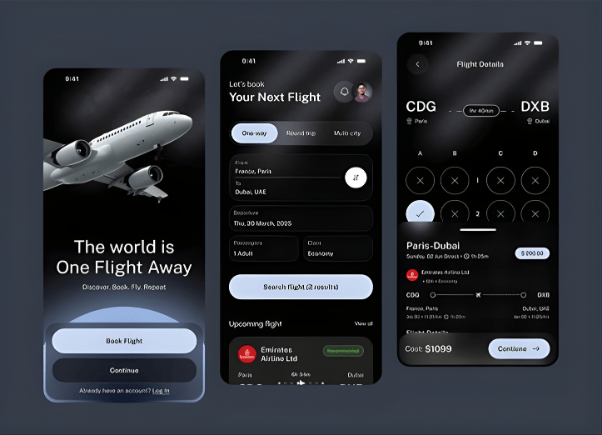
The transformation of flight booking behavior is driven by a convergence of technological advancement, evolving consumer expectations, and increasingly complex market dynamics. Rapid smartphone adoption, supported by Vietnam’s expanding digital economy, has established mobile devices as the dominant gateway for travel planning, with more than 60% of travel searches now conducted on mobile.
At the same time, post-pandemic behavior has reshaped traveler priorities, with flexibility, speed, and real-time updates becoming long-term expectations rather than temporary reactions. Users increasingly favor platforms that allow instant confirmations, easy cancellations, and dynamic itinerary adjustments, all of which are enabled by digital ecosystems.
Another critical driver is the widespread adoption of dynamic pricing algorithms, now standard across airlines and booking platforms in 2026. These systems continuously adjust fares based on demand, timing, and user behavior, creating price volatility and reinforcing frequent checking behavior among digital-savvy travelers. This has led to a paradox: despite having more information than ever, users face greater decision complexity. As a result, they increasingly rely on AI recommendations, filters, and platform trust signals to navigate uncertainty.
Together, these factors indicate that digital transformation is not a temporary shift but a structural evolution toward real-time, data-driven decision-making in travel.
Sources:
https://vietnamnews.vn/travel
https://vietnam.travel/media-industry
What Role Do Mobile Apps and Social Media Play in Flight Decisions?
Mobile apps have become the central hub of travel planning, particularly as mobile-first usage continues to dominate across Vietnam and the broader Asian market. However, the most significant shift in 2026 is the growing influence of social media—especially short-form video platforms like TikTok—as a powerful driver of travel demand.
Recent trends show that these platforms are not only shaping destination awareness but directly influencing booking intent and triggering real-time demand spikes. Travel discovery is no longer search-led but content-led, where users passively encounter destinations before actively searching for flights.
In Vietnam, viral content showcasing affordable trips to destinations such as Da Nang, Phu Quoc, or Da Lat can trigger immediate increases in flight searches and short-term price fluctuations on specific routes, demonstrating the direct impact of content on demand generation. This effectively compresses the journey from inspiration to booking into a near-instant decision cycle.
As a result, travel brands must rethink their strategies. Instead of relying on long awareness funnels, companies need to create content that not only captures attention but also converts immediately through integrated offers, booking links, and clear calls-to-action. In this environment, marketing shifts from planned campaigns to real-time demand capture.
Sources:
https://e.vnexpress.net/news/travel
https://vietnam.travel/media-industry
How Is Data Personalization Influencing Flight Booking?
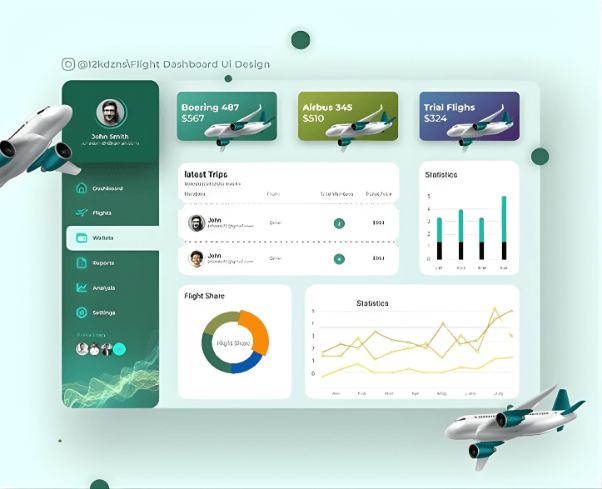
Data-driven personalization, powered by AI and machine learning, is now a standard feature across major OTAs and airline platforms in 2026. As the volume of available options continues to grow, users increasingly experience decision fatigue, making personalization a critical tool for reducing friction.
Platforms analyze behavioral data—including search patterns, booking history, and price sensitivity—to deliver highly tailored recommendations using predictive analytics. This not only improves efficiency but also shifts decision-making from exploration to guided selection.
According to industry research, personalized experiences can significantly increase conversion rates by presenting users with fewer, more relevant choices. However, this also signals a deeper behavioral shift: users are increasingly delegating decision-making to algorithms.
From a marketing perspective, this enables precision targeting at scale, where the right offer is delivered to the right user at the right moment, maximizing both engagement and conversion.
Sources:
https://vietnam.travel/media-industry
https://vietnamnews.vn/travel
What Benefits Does Technology Bring to Travel Agents?
Rather than eliminating travel agents, technology is fundamentally reshaping their role within the travel ecosystem. By leveraging real-time data, CRM systems, and advanced booking tools, agents can deliver faster, more accurate, and highly personalized services.
One of the most effective strategies is dynamic packaging, enabled by integrated platforms. By bundling flights, accommodation, and experiences, agents can simplify decision-making while increasing perceived value.
Industry observations suggest that such bundled solutions can generate 15–30% higher revenue per booking. This reflects a clear shift in consumer preference toward convenience and end-to-end solutions. As a result, travel agents are evolving from transactional intermediaries into strategic advisors and experience designers.
Sources:
https://vietnamtourism.gov.vn/en
https://vietnamtimes.org.vn/travel
What Challenges Come with Digital Flight Booking?
Despite its advantages, digital transformation introduces structural challenges. Information overload is intensifying as platforms expand, often leading to decision paralysis.
Key challenges include:
- too many choices → increased decision fatigue
- constant price fluctuations due to dynamic pricing
- delayed booking decisions in expectation of better deals
- limited human interaction in complex or disrupted situations
Dynamic pricing systems, now standard across the industry, create constant price fluctuations, increasing uncertainty and encouraging users to delay decisions. This can result in missed opportunities or suboptimal outcomes.
Additionally, the lack of human interaction remains a key limitation, particularly in complex or disrupted travel scenarios. This highlights a critical gap: while technology improves efficiency, it does not fully replace the need for trust and reassurance.
Sources:
https://vietnamnews.vn/travel
https://e.vnexpress.net/news/travel
How Should Travel Agents Adapt to Technology-Driven Booking Behavior?
To remain competitive, travel agents must adopt a hybrid model that combines digital efficiency with human expertise. This includes investing in data, CRM systems, and digital platforms while maintaining personalized service.
At the same time, platforms like TikTok are evolving into direct conversion channels, requiring agents to shift toward content-driven, performance-focused strategies.
Success will depend on the ability to integrate technology while maintaining trust—balancing automation with human insight.
Sources:
https://vietnamnews.vn/travel
https://vietnam.travel/media-industry
How Can Partners Start Leveraging Technology Today?
To respond effectively, travel agents must prioritize digital capability building, including advanced booking systems, data utilization, and multi-channel presence.
As AI and platform ecosystems evolve, the gap between digital-native and traditional players will continue to widen. Those who can adapt quickly will gain a sustainable advantage, while others risk losing relevance.
Sources:
https://vietnam.travel/media-industry
Conclusion
In 2026, as digital transformation accelerates across the travel industry, technology is not only changing how flights are booked but fundamentally redefining how decisions are made. The booking journey is now faster, more fragmented, and increasingly driven by real-time triggers rather than long-term planning.
In this environment, the winners will not be those with the most options, but those who can guide decisions the fastest. Organizations that can combine real-time data, seamless digital experiences, and human trust will be best positioned to succeed in an increasingly competitive landscape.
🔗 Let’s connect and grow together! Visit us at
Headquarter / Sales Hub: Room 702, H&N Building, 329-331 Hoang Quoc Viet Street, Cau Giay District, Hanoi, Vietnam.
Betriebsbüros: Vietnam (Hanoi, Danang, Ho Chi Minh), Laos (Vientiane), Cambodia (Siem Reap), Myanmar (Yangon), Thailand (Bangkok)
E-Mail: info@anvuitravel.com
Cellphone No. (Hotline): +84 912 683 908 (Whatsapp, Telegram, Viber)
Fanpage: https://www.facebook.com/anvuitravel84/
Tiktok: https://www.tiktok.com/@anvuitravel
Instagram: https://www.instagram.com/anvuitravel/
Linkin: https://www.linkedin.com/company/anvui-travel/about/?viewAsMember=true
Web: https://anvuitravel.com
✨ Together, let’s make travel extraordinary! ✈️
Hashtag: #anvuitravel #traveltovietnam #tourtovietnam #govietnam #vietnamtour #vietnamvisa