 English
  French
  German
  Italian
  Spanish
  Portuguese
  Japanese
  Korean
  Chinese
  Arabic
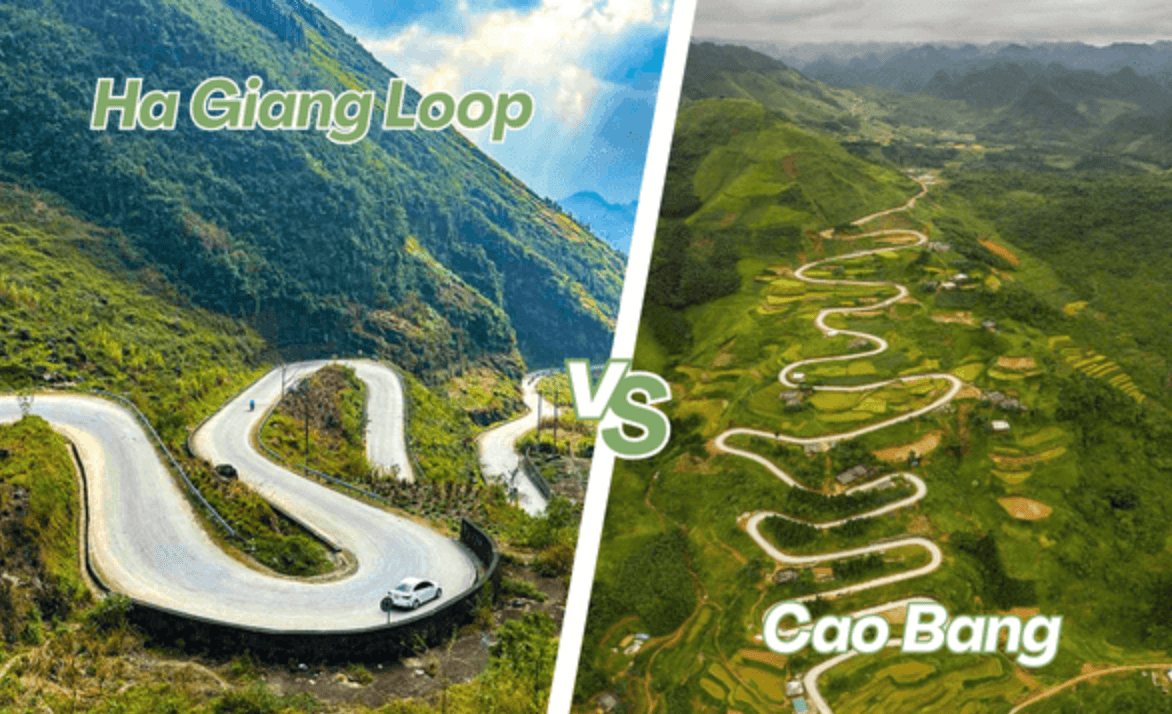
When a client wants to explore Northern Vietnam beyond Hanoi, Sapa and Ha Long Bay, one question often appears during itinerary planning: Cao Bang or Ha Giang?
Both destinations offer mountainous scenery, living ethnic cultures and UNESCO Global Geoparks. Dong Van Karst Plateau and Non Nuoc Cao Bang are both listed within UNESCO’s Global Geopark network. Yet from a product-design perspective, they should not be treated as interchangeable versions of the same journey.
The more useful question for travel agents is therefore not which destination is better? It is “Which destination is the right fit for your clients, this itinerary and this amount of time?”
SIDE BY SIDE
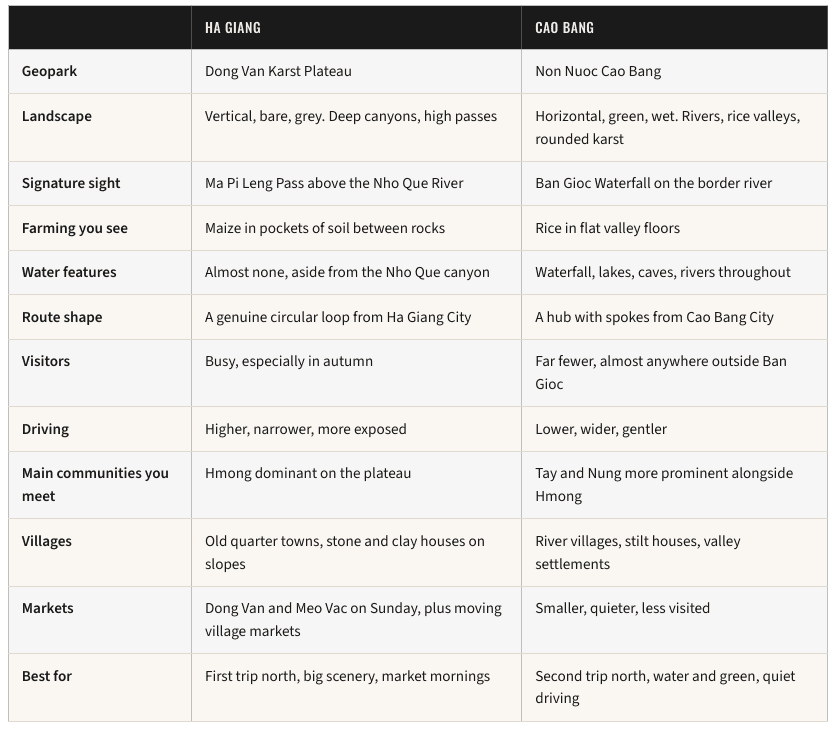
Landscape: Dramatic Heights vs Water and Green Valleys
Ha Giang
Ha Giang’s strongest visual identity comes from the Dong Van Karst Plateau, where limestone mountains, narrow valleys and steep passes shape the road journey. Quan Ba, Yen Minh, Dong Van, Ma Pi Leng Pass and Meo Vac form a sequence in which the landscape changes continually as travellers gain and lose elevation.
The Nho Que River adds another layer below the high road around Ma Pi Leng. Vietnam Tourism describes the Dong Van–Meo Vac section as one where even the relatively short 24-kilometre distance can occupy much of a morning once scenic stops are included.
This is an important product point: in Ha Giang, the road is not simply the transfer between attractions. The road is part of the attraction.
Cao Bang
Cao Bang offers another expression of Northern Vietnam’s limestone geography. Water plays a much stronger visual role through the Quay Son River, Ban Gioc Waterfall, caves, lakes and fertile valleys. Vietnam Tourism notes the province’s extensive river and lake systems, while Ban Gioc sits within the Non Nuoc Cao Bang UNESCO Global Geopark.
Nguom Ngao Cave, village landscapes and agricultural valleys allow an itinerary to move between different types of natural environments rather than relying on a continuous high-mountain road experience.
What this means for travel agents
Ha Giang may fit clients who want scale, elevation, panoramic scenery and an adventurous overland narrative. Cao Bang may fit travellers whose motivation is water, geology, rural landscapes, photography and a slower rhythm of exploration. Both contain mountains, rivers and diverse cultures; the distinction is one of emphasis, not an absolute division.
Signature Experiences: Ban Gioc vs Dong Van–Ma Pi Leng
Ha Giang’s product value is difficult to reduce to a single attraction. Dong Van town, mountain settlements, Ma Pi Leng, Meo Vac, viewpoints and the Nho Que River work together as a sequence of experiences along the road. The Dong Van Karst Plateau is therefore particularly effective when sold as a journey rather than a checklist of sightseeing stops.
In Cao Bang, Ban Gioc Waterfall provides a stronger visual anchor. Fed by the Quay Son River, its appearance changes noticeably with water levels. Nguom Ngao Cave and nearby villages can then provide context and variety, while longer programmes may add other geological, historical or rural areas of Cao Bang.
For agents, that difference affects marketing. A Ha Giang itinerary can sell the journey itself; a Cao Bang itinerary can use Ban Gioc as its headline image while ensuring the surrounding countryside gives the product enough depth.
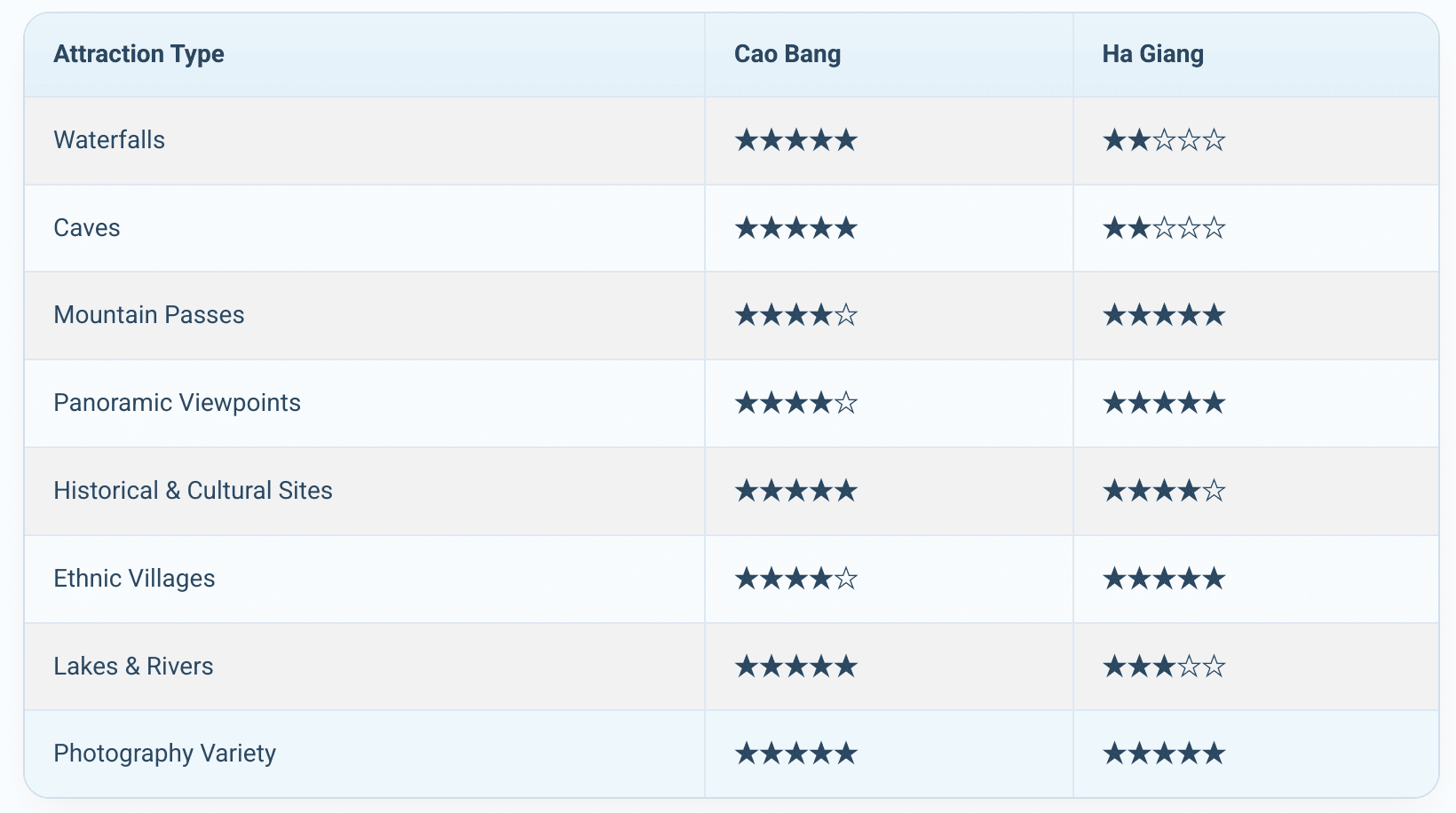
Which Province Has More Attractions?
Both destinations offer a wide variety of attractions, but their focus differs. Cao Bang combines waterfalls, caves, lakes, rivers, valleys, historical sites, and scenic mountain landscapes. Ha Giang is centered around mountain passes, viewpoints, ethnic villages, geological landmarks, and cultural experiences.
Culture: Different Expressions of Northern Vietnam
The northern highlands are living cultural landscapes, not collections of “ethnic attractions.”
Around Dong Van and Meo Vac, Hmong communities are particularly visible alongside Tay, Dao, Nung and other groups. Highland markets, agricultural landscapes and traditional architecture can add cultural depth when incorporated respectfully. Vietnam Tourism specifically highlights the multicultural character of Ha Giang and the importance of local markets within the destination experience.
In Cao Bang, Tay and Nung cultural presence is especially important, alongside Dao, Hmong and other communities. Stilt-house architecture, farming landscapes, regional food and community-based tourism can complement the area’s geological attractions.
Adventure Level and Client Comfort
Ha Giang’s winding roads, frequent elevation changes and exposed mountain sections mean the journey can feel demanding even when clients are travelling by private car rather than motorcycle. An Vui Travel recommends appropriate driving experience and also points visitors toward private-car or locally driven alternatives.
Many mainstream Cao Bang sightseeing routes are less continuously dominated by high passes, although the province is still mountainous and road quality varies by route, weather and construction.
For older travellers, families and mixed-ability groups, destination suitability therefore depends heavily on vehicle choice, driving-day length, overnight stops and itinerary pacing.
Seasonality: When Each Destination Changes Character
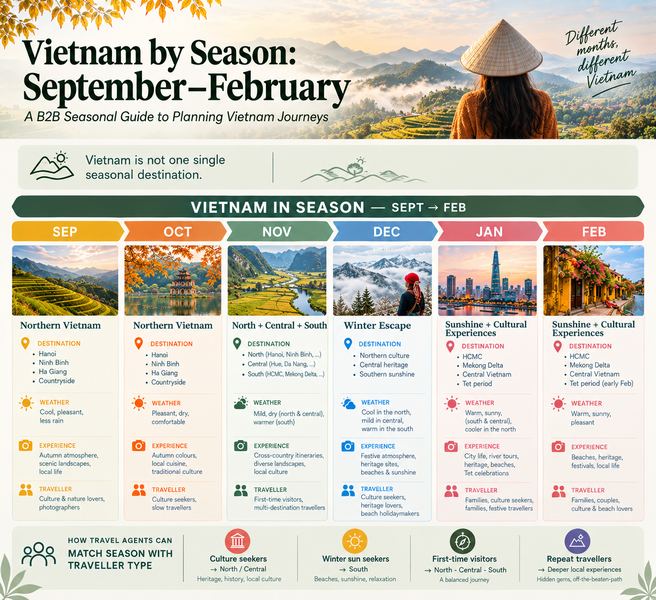
Ha Giang can be visited throughout the year, but seasonal conditions change the product. Vietnam Tourism highlights cooler conditions from September to November, flowers in spring and late autumn, and regular monsoon rain during July and August. Buckwheat flowering is particularly associated with the October–December period, although timing naturally varies by year.
Fog and low cloud can reduce visibility on mountain roads, particularly relevant when panoramic views are a client’s main motivation.
For Cao Bang, Ban Gioc’s water level deserves particular attention. Vietnam Tourism describes June–September as the wetter period, when river flow is higher, while October–May generally brings lower flow. Autumn can also combine waterfall scenery with agricultural landscapes.
Sources:
https://hagiangbyjeep.com/travel-guide/ha-giang-vs-cao-bang-2/
https://serenitycaobang.com/cao-bang-vs-ha-giang.html
Which Traveller Fits Which Destination?
Ha Giang may suit travellers who prioritise: dramatic mountain landscapes; scenic road journeys; highland culture; photography; mountain passes; active or experiential travel; and a strong sense of travelling through the landscape.
Cao Bang may suit travellers who prioritise: waterfalls and rivers; caves and geological landscapes; green countryside; photography; village landscapes; nature-focused travel; and a slower style of exploration.
Older Travellers, Families and Premium FITs
Neither destination needs to be limited to younger adventure travellers.
With a private vehicle, experienced local driver, sensible daily mileage, carefully chosen accommodation and additional nights, both can work for premium FITs and selected family or senior markets.
Ha Giang can be softened by reducing daily road time and adding longer stays. Cao Bang can become a particularly attractive private nature journey when Ban Gioc is combined with caves, countryside and community experiences instead of being treated as a fast return excursion.
FAQ Section
1. Is Cao Bang better than Ha Giang?
Neither is objectively better; they simply offer different experiences. Ha Giang is superior for dramatic, towering mountain architecture and technical driving. Cao Bang is better for pristine water features, peaceful valleys, safety, and a lack of mass tourism.
2. Is the Cao Bang Loop easier than the Ha Giang Loop?
Yes, significantly. The roads in Cao Bang are wider, have gentler inclines, far fewer sharp switchbacks, and a fraction of the heavy tourist and industrial traffic found in Ha Giang.
3. Which destination is less crowded?
Cao Bang is vastly less crowded than Ha Giang. While Ha Giang can feel overwhelmed with motorcycle convoys during peak season, Cao Bang’s attractions and roads remain quiet, peaceful, and largely undiscovered by mass international tourism.
4. Which is better for photography?
Ha Giang is unparalleled for epic, vast scale and dramatic mountain vistas. However, Cao Bang offers a wider variety of subjects for your lens, including majestic waterfalls, misty bamboo rivers, immense caves, and authentic, unposed portraits of local rural life.
Planning a Northern Vietnam itinerary for your clients? An Vui Travel can help you evaluate routing, seasonality and the right balance between Cao Bang, Ha Giang and other Northern Vietnam destinations.
#CaoBang #HaGiang #DongVanKarstPlateau #HaGiangLoop #VietnamDMC #B2BTravel #AnVuiTravel
🔗 Let’s connect and grow together!
Headquarters / Sales Hub: 5th Floor, H&N Building, 329, 331 Hoang Quoc Viet Street, Cau Giay District, Hanoi, Vietnam.
Operation Offices: Vietnam (Hanoi, Danang, Ho Chi Minh), Laos (Vientiane), Cambodia (Siem Reap), Myanmar (Yangon), Thailand (Bangkok).